No products in the cart.
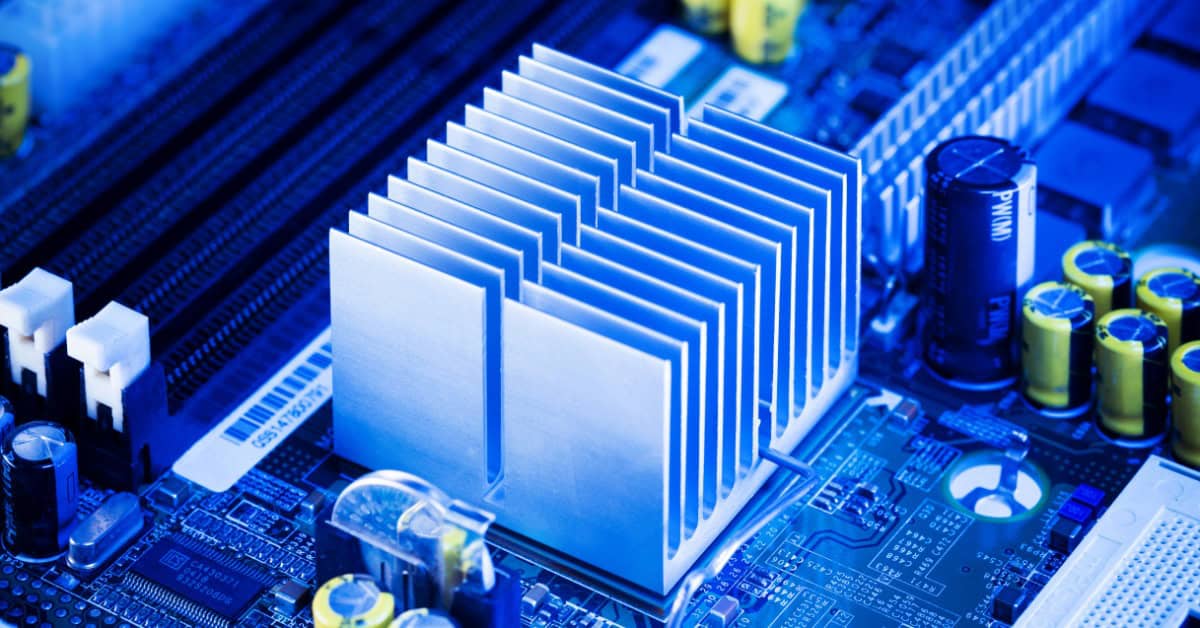
Electronic systems keep getting smaller, faster, and more powerful. These gains create a familiar challenge for engineers because compact components often generate concentrated heat in very small spaces. Without a smart thermal strategy, heat can reduce performance, shorten component life, and limit how hard a system can work.
High-heat-transfer composites give engineers another way to manage that challenge. Instead of relying on a single material to meet every requirement, a composite combines materials with complementary thermal, mechanical, and electrical properties. That approach can support efficient heat dissipation while helping designers control weight, insulation, strength, or dimensional stability. Continue reading to explore thermal management with high-heat-transfer composites.
Heat rarely causes problems simply because a device reaches a high temperature. Trouble often starts when heat collects around sensitive components or moves too slowly through the surrounding structure. A strong thermal design gives that heat a predictable route away from the source and toward a heat sink, spreader, housing, or cooling system.
Thermal conductivity plays a central role in that process, but conductivity alone doesn’t determine performance. Engineers also need to consider geometry, contact quality, thickness, and the direction of heat flow. A material may conduct heat well in one direction but perform differently along another axis.
A high-heat-transfer composite combines a thermally conductive phase with another material that provides structural support, insulation, processability, or another useful property. Engineers can adjust the material system to balance thermal performance with the demands of the application.
For example, a ceramic matrix can provide electrical insulation and high temperature resistance. A conductive additive can improve heat transfer through that matrix when the material system and processing method support good particle contact. Metal-based composites can offer another path when the design calls for strong heat spreading and mechanical durability.
This flexibility helps when a single material forces too many compromises. Copper conducts heat well, but its density and electrical conductivity can complicate some designs.Incorporating ceramic or diamond phases allows engineers to decouple thermal conductivity from unwanted electrical paths and excessive expansion..
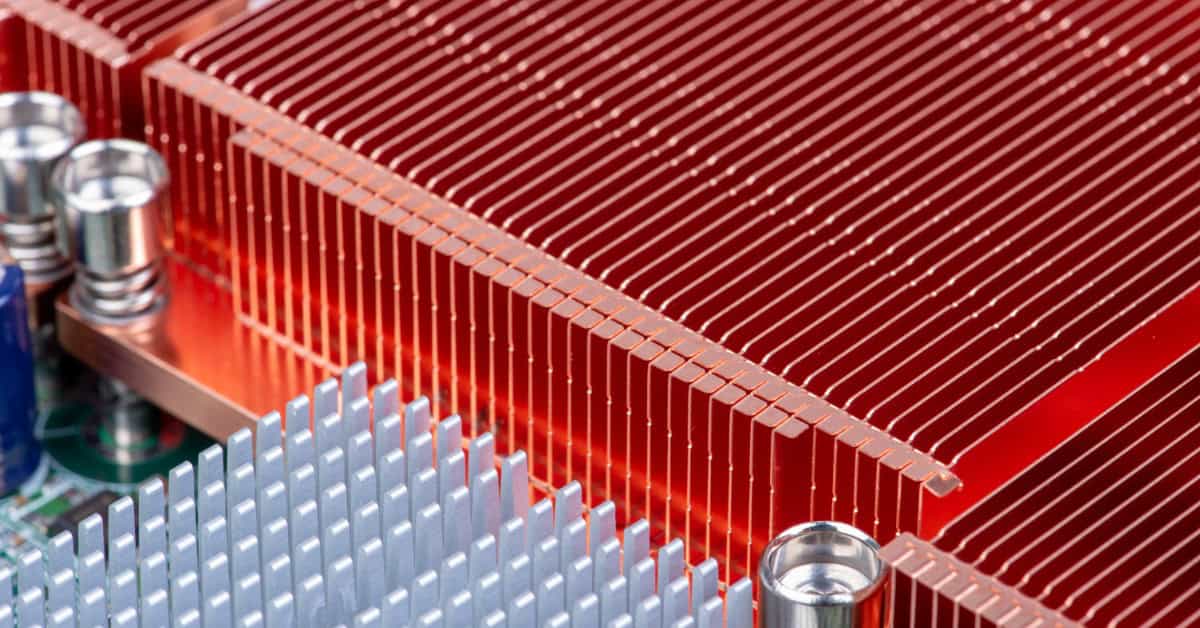
Engineers sometimes focus on the conductivity of each ingredient and overlook the boundaries between them. Heat must cross those internal boundaries as it travels through the composite. Poor bonding, gaps, phonon scattering, thermal boundary resistance (TBR), contamination, or uneven particle distribution can slow heat transfer even when the individual materials look promising on paper.
Particle size and shape can influence how easily conductive pathways form. Engineers often need to balance packing density with manufacturability rather than chasing one particle size across every application.
This connection between particles and matrix also explains why processing deserves close attention. Mixing quality, pressure, sintering conditions, and finishing steps can influence final thermal behavior. A well-chosen composition still needs a controlled manufacturing process to deliver consistent results.
Diamond attracts attention in thermal management because it can conduct heat extremely well while also providing electrical insulation. These traits make diamond useful in material systems that require rapid heat dissipation without creating an unwanted electrical path.
Engineers can incorporate diamond particles into metal or ceramic systems, depending on the application. The surrounding matrix influences thermal expansion, mechanical behavior, and fabrication. Weak contact between diamond and the matrix can limit the benefit of the high-conductivity phase.
Companies that already work with an industrial abrasives supplier may recognize diamond powder primarily in grinding, lapping, or polishing applications. Thermal composites use the same material family for a different purpose, with particle characteristics and purity influencing how engineers build the final material system.
Ceramics often provide more than heat resistance. Materials such as aluminum nitride can offer useful thermal conductivity along with electrical insulation, making them attractive for substrates, packages, and other components near heat-generating electronics.
Alumina offers a different balance. It doesn’t match the thermal conductivity of aluminum nitride or diamond, but engineers value its electrical insulation, chemical stability, and widespread manufacturing familiarity. In some composite systems, alumina can provide a stable ceramic foundation while another phase enables greater heat transfer.
Boron nitride also deserves attention in thermal designs that require insulation and thermal performance. Its thermal behavior can depend strongly on structure and orientation. Hexagonal boron nitride () exhibits strong 2D anisotropy—yielding high in-plane thermal conductivity (~) compared to very low through-plane/c-axis conductivity (~). So engineers should match the material form to the direction of heat flow. That kind of detail can make a large difference in real components.
A material that moves heat quickly can still create problems if it expands at a very different rate from neighboring components. Repeated heating and cooling can place stress on joints, interfaces, coatings, or brittle parts.
Composite design gives engineers a way to manage thermal expansion more deliberately. By adjusting the matrix and conductive phase, they can target a better fit with semiconductors, ceramics, metals, or packaging materials. That balance can reduce stress during thermal cycling and help preserve contact between layers.
Engineers should evaluate thermal conductivity and expansion together rather than treating them as separate decisions. A material that looks excellent in a conductivity table may perform poorly if expansion mismatch damages the assembly over time.
Raw material quality sets the starting point, but processing determines how those materials work together. Powder purity, particle distribution, surface condition, and moisture control can influence mixing and densification.
During forming and sintering, engineers control pressure, temperature, atmosphere, and time to achieve the desired structure. These choices can affect porosity, interfacial contact, and dimensional stability. Small changes in processing can produce noticeable differences in thermal performance when the design depends on tightly controlled pathways.
Machining and finishing also warrant attention. A flat, clean surface can improve contact with an adjacent component, whereas poor surface quality can create small gaps that increase thermal resistance. Designers should treat the composite and its interfaces as a single connected thermal system.

No single high-heat-transfer composite fits every thermal challenge. A power module may prioritize electrical insulation and heat dissipation, while an aerospace component may place greater emphasis on mass and thermal cycling. A furnace-related application may focus on high-temperature stability and compatibility with the surrounding environment.
Engineers can narrow the options by defining the operating temperature, heat flux, electrical requirements, mechanical loads, geometry, and manufacturing constraints. That information helps them compare composite systems on practical performance rather than one headline property.
Custom material dimensions or particle specifications can also help when standard products don’t fit the design. Early communication between engineers and material suppliers can reduce avoidable compromises before the project reaches production.
| Material / Phase | Thermal Conductivity, κ [W/(m·K)] | CTE, α [10−6/K] | Electrical Trait | Primary Role in Composites | |
|---|---|---|---|---|---|
| Diamond | 1,200 – 2,000+ | 1.0 – 1.5 | Insulator | Ultra-high reinforcement phase | |
| Aluminum Nitride (AlN) | 170 – 230 | 4.5 – 5.0 | Insulator | High- dielectric substrate/matrix | |
| Hexagonal BN (h-BN) | ~300 – 400 (in-plane) / 2 – 5 (c-axis) | -2.5 (in-plane) / 35 (c-axis) | Insulator | Anisotropic filler; thermal interface films | |
| Alumina () | 25 – 35 | 7.0 – 8.5 | Insulator | Mechanically robust, baseline ceramic matrix | |
| Copper (for reference) | ~400 | ~16.5 – 17.0 | Conductor | Conventional baseline heat spreader |
High-heat-transfer composites play a key role in effective thermal management by combining desirable properties in a single material system. Engineers can use these materials to control heat flow, improve thermal performance, and support reliable operation. Incorporating them early in the design process helps engineers address thermal challenges before they affect overall performance.
The strongest designs look beyond thermal conductivity alone. They consider interfaces, expansion behavior, electrical requirements, processing, and final geometry together. That broader view helps engineers create a thermal path that supports reliable performance without forcing unnecessary trade-offs.
As electronic and industrial systems continue to pack more power into smaller spaces, material selection will remain central to thermal management. High-heat-transfer composites give designers a flexible way to move heat where it needs to go while supporting the mechanical and electrical demands around it.