Where Is the Best Place to Buy Quartz Sand?
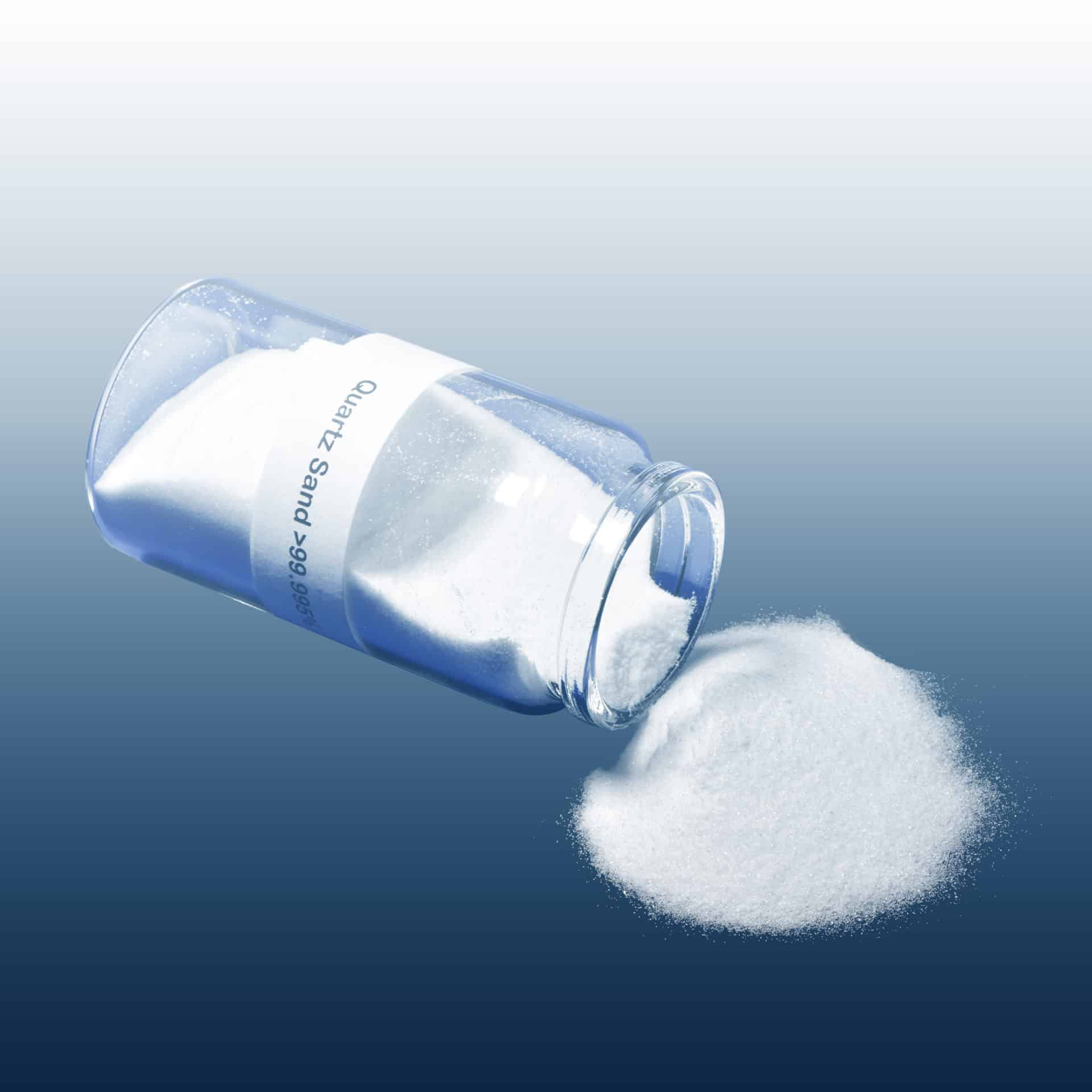
Not all quartz sand is the same. That distinction matters enormously when your application depends on material purity at the parts-per-million level. Standard construction-grade silica won't cut it for semiconductor processing, optical fiber production, or specialty glass manufacturing. Those applications demand crystalline SiO₂ with trace impurities controlled so tightly that even small deviations affect yield, optical clarity, or thermal performance. AdValue Technology supplies high purity quartz sand precisely to the standard those applications require.
Two Grades. Both Rigorously Controlled.
AdValue Technology offers high purity quartz sand in two distinct purity grades, each targeting a different performance threshold:
| Grade |
Purity Level |
Ideal Applications |
| SD-990 |
99.99% |
Wide range of high-tech applications where iron, aluminum, and titanium impurities must be minimized but ultra-trace control is not the limiting factor. |
| SD-995 |
99.995% |
The most demanding semiconductor, optical, and advanced ceramics applications where every additional fraction of purity translates directly into better performance or higher yield. |
No minimum order quantity applies. Whether you need a single 250g research package or a custom bulk supply, AdValue Technology accommodates the order size your project actually requires.
Purity That Comes From Rigorous Processing
Achieving consistent high purity in crystalline quartz sand isn't a single-step operation.
AdValue Technology supplies high-purity quartz sand that is processed through multiple quality control and purification steps, including washing, classification, magnetic separation, chemical leaching, and flotation. These multi-stage processes help reduce impurity types that can degrade performance in sensitive applications.
Iron contamination can affect optical performance by increasing absorption or reducing clarity. Aluminum and titanium impurities can influence melt behavior during crystal growth, glass production, and other high-temperature processes. By sourcing quartz sand that has gone through controlled processing and quality checks, AdValue Technology helps customers receive more consistent material from batch to batch, reducing the risk of costly process adjustments.
Physical Properties Built for Demanding Environments
AdValue Technology's high purity quartz sand brings together a set of physical and chemical properties that make it useful in demanding applications where material consistency matters:
- Melting point of approximately 1710°C that supports use as a feedstock for glass, fused silica, and other high-temperature processes
- Mohs hardness of 7 that contributes scratch and wear resistance in composite, filler, and abrasive-related applications
- Low coefficient of thermal expansion for dimensional stability across temperature cycling
- Excellent chemical stability with resistance to most acids except hydrofluoric acid, while strong alkalis and hot concentrated hydroxide solutions can attack silica-based materials
- Minimal hygroscopic behavior that maintains particle and purity integrity during storage and handling
Together those properties explain why high purity quartz sand appears so consistently across the most technically demanding production environments in the world.
Applications Across the Industries That Define Modern Technology
The range of industries that depend on high purity quartz sand is broader than most buyers realize. AdValue Technology's HPQ serves critical roles in:
- Semiconductor manufacturing: High-purity quartz sand is used to produce fused quartz products, including crucibles used in silicon crystal growth. Low impurity levels are important because contamination from quartz components can affect the silicon melt during Czochralski pulling.
- Optical fiber production: Optical fiber manufacturing depends on extremely high-purity silica and fused silica materials. Metallic impurities, hydroxyl content, and other contaminants can increase optical attenuation and reduce transmission performance.
- Specialty glass and lighting: Fused quartz and specialty glass compositions require consistent SiO₂ purity to maintain optical and thermal properties batch to batch.
- Aerospace and defense components: High-performance fused silica and quartz components are used in applications requiring thermal stability, optical transmission, low thermal expansion, and chemical resistance.
- Additive manufacturing: Silica and quartz sands are used in binder jetting and other 3D-printing processes, especially for molds and cores. Controlled particle size distribution, flowability, and chemical consistency help improve print quality, dimensional accuracy, and part integrity.
- Advanced ceramics and electronics: High-purity silica materials can serve as fillers, insulating materials, and feedstocks for substrates, composites, and other electronic or ceramic systems where contamination control is important.
- Laboratory and chemical processing: High-purity quartz sand can be used as a feedstock for fused quartz tubes, vessels, liners, and thermal-processing components. Its chemical stability and high-temperature capability make silica-based materials useful in demanding laboratory and industrial environments.
Custom Particle Sizes for Specialized Processes
Standard particle size distributions cover a wide range of applications but precision manufacturing processes sometimes need something specific. AdValue Technology offers custom particle size specifications tailored to sintering behavior, packing density, flow characteristics, or surface area requirements. Contact their team with your target particle size distribution and they'll work with you to produce a specification that fits your process.
Long Shelf Life and Cost-Effective Pricing
When stored in dry, sealed conditions, AdValue Technology's high-purity quartz sand can maintain its quality for many years. Because SiO₂ is chemically stable and minimally hygroscopic, the material itself does not normally degrade under standard storage conditions. The main storage concerns are moisture, dust, packaging damage, and cross-contamination.
This long shelf life makes high-purity quartz sand practical for customers who need consistent material availability for glass, fused silica, ceramics, electronics, laboratory, or thermal-processing applications. Customers can stock appropriate quantities to reduce procurement interruptions while maintaining lot traceability and quality control.
For applications where high-purity quartz sand is the specified feedstock, AdValue Technology provides a practical balance of purity, consistency, availability, and procurement value.
Reach AdValue Technology at +1 (520) 514-1100 or at sales@advaluetech.com to place an order, request a custom particle size specification, or discuss your application requirements.
Browse the full high purity quartz sand lineup at advaluetech.com and order today.
Frequently Asked Questions About Quartz Sand
Questions About Quartz Sand Material Properties
What is high purity quartz sand, and how is it different from regular silica sand?
High purity quartz sand is composed primarily of silicon dioxide (SiO₂) with minimal impurities, typically exceeding 99.9% purity. Unlike regular silica sand, which may contain iron, aluminum, and other contaminants, high purity quartz sand is processed to remove trace elements that can interfere with optical, electronic, or glass-making applications. Its superior purity makes it ideal for research, semiconductor manufacturing, and high-performance industrial processes.
What purity levels (e.g., % SiO₂) does AdValue Technology offer for quartz sand?
AdValue Technology offers quartz sand with SiO₂ content typically ranging from 99.99% and above, depending on the grade and application. Higher-purity grades are suited for sensitive electronic, optical, or semiconductor applications where even trace metal contaminants can affect performance. Consistent purity is ensured through rigorous processing, testing, and quality control measures.
What particle sizes and particle size distributions are available for high-purity quartz sand?
High purity quartz sand is available in a wide range of particle sizes, from submicron powders to coarse granular sands. Particle size distribution can be tailored to application needs, whether for sintering, glass-making, refractory applications, or slurry preparation. Controlling particle size and distribution ensures uniform behavior in compaction, melting, or chemical reactions.
What are the thermal properties (melting point, thermal expansion) of high purity quartz sand?
High purity quartz sand has a high melting point of approximately 1,710°C (3,110°F) and a relatively low coefficient of thermal expansion. These properties provide good thermal and chemical stability at elevated temperature conditions, making it suitable for refractory applications, high-temperature ceramics, and glass manufacturing. When processed and heated under controlled conditions, quartz maintains dimensional stability, supporting its use in precision and high-purity applications.
How chemically stable is quartz sand under acidic or basic conditions?
Quartz sand is highly chemically stable in most neutral and mildly acidic environments and resists chemical attack from acids at moderate temperatures except hydrofluoric acid . Although strong alkalis can attack silica at elevated temperatures, quartz remains highly inert under typical processing conditions. This overall chemical inertness makes high purity quartz sand ideal for laboratory experiments, glass-making, and high-performance industrial processes.
How is high purity quartz sand processed and purified to achieve high purity?
High purity quartz sand undergoes a combination of physical and chemical purification steps, including washing, classification, magnetic separation, and chemical leaching to remove iron, aluminum, and other impurities. Advanced processes may include flotation to achieve ultra-high purity levels, while controlled thermal treatment enhances material stability and purity. Each stage is designed to ensure the material meets stringent requirements for research and industrial use.
What are the mechanical properties (hardness, abrasion resistance) of high purity quartz sand?
Quartz sand exhibits high hardness and good abrasion resistance, with a Mohs hardness of approximately 7. This makes it effective for use as a filler in composites, abrasive materials, and sintered ceramics. While quartz is mechanically stable under many processing conditions, it is inherently brittle and not intended for high-impact structural applications.
How should high purity quartz sand be stored to maintain its quality?
Quartz sand should be stored in dry, sealed containers to prevent contamination and moisture absorption. Keeping the material away from reactive chemicals and excessive humidity ensures its purity and stability for long-term storage.
What is the moisture absorption or hygroscopic behavior of quartz sand?
High purity quartz sand is minimally hygroscopic, but fine powders can absorb small amounts of moisture from the air. This can affect flowability and processing, so powders should be stored in low-humidity conditions to maintain optimal performance.
How does the presence of trace impurities (e.g., Fe, Al, B) affect the performance of quartz sand?
Trace impurities like iron, aluminum, or boron can cause discoloration, reduce transparency, or alter thermal and chemical behavior. In optical, semiconductor, or high-temperature applications, even ppm levels of contaminants can significantly affect performance. High purity quartz sand is processed to minimize these elements.
How does quartz sand compare with other high-purity materials like fused silica or synthetic silica?
High purity quartz sand is a crystalline form of SiO2 and is often more cost-effective than fused or synthetic silica. Fused silica and synthetic silica are amorphous materials with superior homogeneity, lower thermal expansion, and can be used for ultra-precision optics or demanding high-temperature applications. The choice depends on required purity, thermal stability, dimensional tolerance, and mechanical requirements.
What is the typical shelf life or stability of stored quartz sand?
When stored properly in dry, sealed conditions, high purity quartz sand can remain stable for many years. Contamination or moisture exposure can reduce quality, particularly for fine powders or applications requiring ultra-high purity.
How do you handle or transport high purity quartz sand safely in bulk?
Bulk quartz sand should be transported in sealed containers or bags to prevent contamination and dust release. Handling equipment should minimize dust generation, and workers should use PPE and proper ventilation. Safe transport practices protect both personnel and product quality.
What is the lead time for custom or high-purity quartz sand orders?
Lead times vary depending on grade, particle size, quantity, and processing requirements. Standard high purity quartz sand may be shipped immediately, while custom specifications could take several weeks for production, purification, and quality testing.
Questions About Quartz Sand Applications
What are typical research and industrial applications for high purity quartz sand?
High purity quartz sand is used in semiconductors, optics, glass manufacturing, advanced ceramics, and chemical processing industries. In research and development settings, it serves as a high purity filler or raw material for controlled experiments and material synthesis. Industrially, it is a critical feedstock for fused silica production, refractory components, optical fibers, and high-performance composite materials.
How does high purity quartz sand perform at high temperatures?
Quartz sand maintains excellent chemical stability and high temperature resistance, with a melting pointnear 1,700°C, making it suitable for high-temperature sintering, glass melting, and refractory applications.
Is quartz sand safe to handle in powdered or granular form (silica dust hazards)?
While chemically inert, respirable crystalline silica dust can pose health risks, including lung irritation or silicosis with prolonged exposure. Safe handling practices, including dust masks, gloves, and proper ventilation, are essential when working with fine quartz powders.
What safety precautions are required when using high purity quartz sand?
Safety precautions include wearing personal protective equipment (PPE), such as dust masks, gloves, and safety glasses. Working in well-ventilated areas or using fume hoods prevents inhalation of fine dust. Handling in accordance with OSHA or local safety guidelines ensures safe use in laboratories and industrial settings.
Are there coated or surface-treated quartz sands available for specialized applications?
Yes, quartz sand can be surface-treated or coated to improve dispersion in composites, enhance chemical resistance, or modify surface energy for specific applications. Treatments ensure compatibility with polymers, metals, or slurry formulations in advanced materials processing.
How does the quartz sand particle size affect sintering or compaction behavior?
Particle size strongly affects sintering, packing density, and compaction. Fine powders allow higher packing density and uniform sintering, while coarser particles may improve flowability and reduce shrinkage. Choosing the right particle size distribution ensures optimal processing and final product performance.
Questions About Quartz Sand Usage
Can quartz sand be used for glass and optical applications?
Yes, high purity quartz sand is a critical raw material for glass, fused silica, and optical-grade products. Its minimal impurities prevent discoloration, reduce defect formation, and allow for high transparency in lenses, fiber optics, and specialty glass. High-purity grades ensure consistent performance in optical and photonics applications.
Is high purity quartz sand suitable for use in semiconductor or electronics manufacturing?
High-purity quartz sand underpins many semiconductor manufacturing processes as the source material for fused quartz and fused silica components. Its low impurity content reduces contamination risks during high-temperature processing, while its inherent electrical insulation and thermal stability enable reliable performance in advanced electronic applications.
Can high purity quartz sand be used in additive manufacturing or 3D printing?
Yes, quartz sand can be used in additive manufacturing, particularly in binder jetting or slurry-based 3D printing for ceramic or glass components. Particle size, shape, and purity are critical factors for achieving smooth surfaces, proper sintering, and structural integrity.
Can the quartz sand be used as a filler in polymer or composite materials?
Yes, high purity quartz sand is commonly used as a filler in polymers, resins, and composites to enhance thermal stability, hardness, wear resistance, and dimensional control. Proper particle size and dispersion ensure uniform mechanical and thermal performance.