No products in the cart.
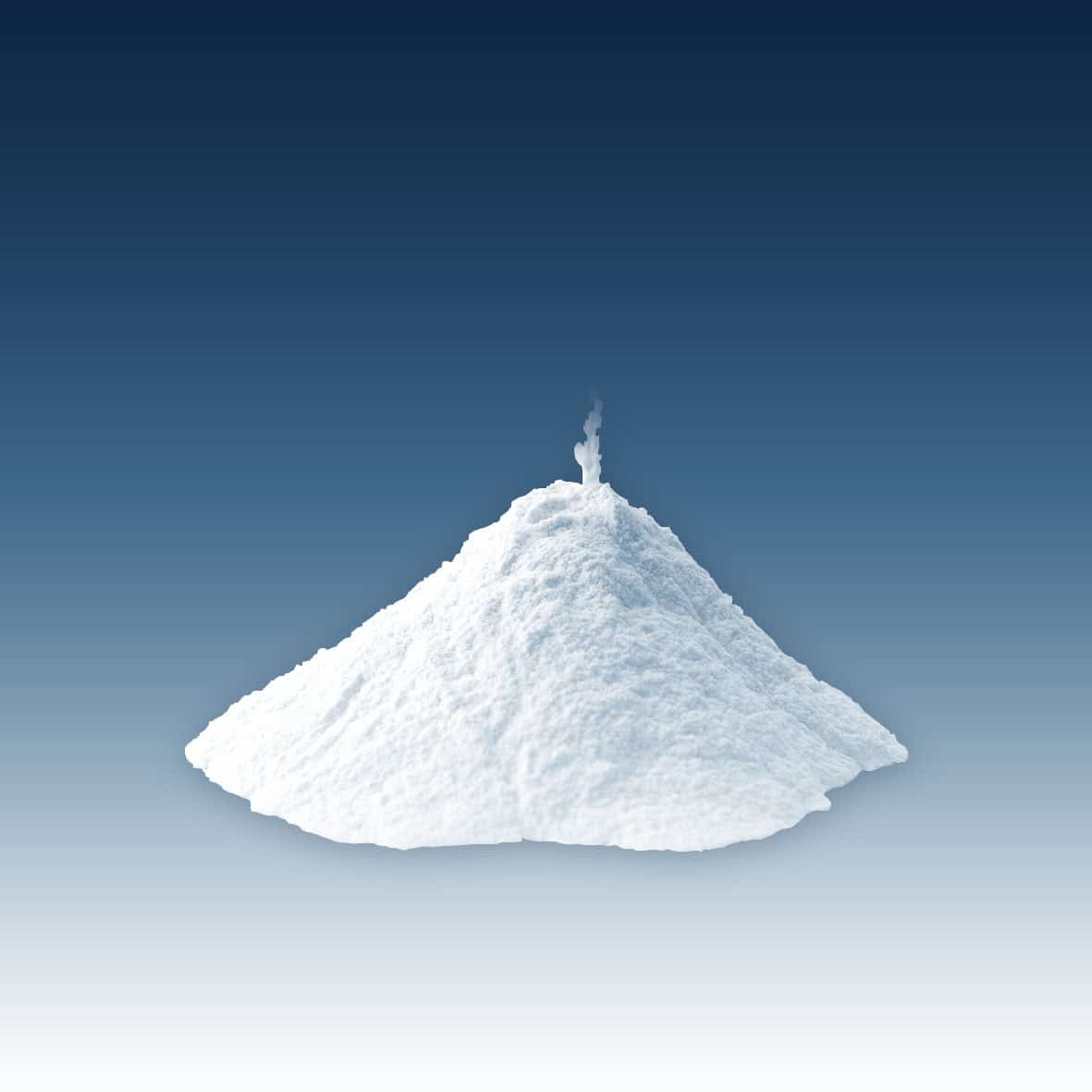
AdValue Technology offers high purity (>99.5%) Spherical Aluminum Nitride (AlN) Powders. Aluminum nitride powder is an advanced material with exceptional properties. Its combination of ceramic insulation properties, low thermal expansion, high elastic modulus and excellent thermal conductivity (similar to metals like copper and aluminum) positions it as a critical material for industries such as electronics, semiconductors and aerospace.
Our Aluminum Nitride powders are commonly used as a thermal filler in thermal conductive plastics, thermal conductive resin etc. It can also be used as an additive material for composites and ceramics to improve the material’s performance.
Please contact us to request a quote for Aluminum Nitride Powders.
| Grade | Particle size shape | Density | Thermal Conductivity | Particle Size (D50) | Specific Surface (BET) | Bulk Density |
|---|---|---|---|---|---|---|
| ALN-PD-1 | Irregular | 0.67g/cm² (Tap Density) | >170w/m*k | 1.12μm | 2.8m²/g | 0.32-0.4 |
| ALN-PD-2 | Irregular | 3.26g/cm² | >170w/m*k | 5-10μm | 0.438m²/g | 1.3-1.5 |
| ALN-PD-3 | Spherical | 3.3g/cm² | >170w/m*k | 20-40μm | 0.18m²/g | 1.4-1.6 |
| ALN-PD-4 | Spherical | 3.3g/cm² | >170w/m*k | 40-60μm | 0.13m²/g | 1.6-1.8 |
| ALN-PD-5 | Spherical | 3.3g/cm² | >170w/m*k | 70-90μm | 0.1m²/g | 1.7-1.9 |
| ALN-PD-6 | Spherical | 3.3g/cm² | >170w/m*k | 90-110μm | 0.08m²/g | 1.7-1.9 |
| ALN-PD-7 | Spherical | 3.3g/cm² | >170w/m*k | 110-130μm | 0.06m²/g | 1.7-1.9 |
What is aluminum nitride (AlN) powder, and what are its key properties?
Aluminum nitride (AlN) powder is a high-performance ceramic material known for its exceptional thermal conductivity, electrical insulation, and chemical stability. It combines low thermal expansion with high hardness, making it suitable for high-temperature and thermal management applications. AlN’s unique properties allow it to serve as substrate, heat sink, or be used as filler in advanced ceramics, electronics, and composites, where both thermal performance and electrical insulation are critical.
How pure are the AlN powders that AdValue Technology offers?
AlN powders from AdValue Technology are typically >99.5% pure, with low levels of oxygen and other impurities. High-purity grades are designed for applications in electronics, LEDs, and advanced ceramics, where even small amounts of contaminants can compromise thermal or electrical performance. Purity levels are controlled through precise synthesis methods and rigorous quality testing to ensure reliable and consistent results.
What particle sizes are available for AlN powder?
AlN powders are offered in a wide range of particle sizes, including submicron, micron, and larger particles. Fine powders are ideal for sintering and high-density ceramic fabrication, while coarser powders may be used in composite materials or refractory applications. Particle size distribution affects packing density, sintering behavior, and thermal conductivity, making it an essential factor in choosing the right AlN powder for specific experiments or production processes.
How does AlN powder compare to other nitride ceramics (e.g., silicon nitride)?
AlN differs from other nitride ceramics such as silicon nitride (Si₃N₄) primarily in thermal and electrical properties. AlN offers much higher thermal conductivity while maintaining excellent electrical insulation, making it ideal for heat dissipation applications. Silicon nitride, on the other hand, provides higher fracture toughness and mechanical strength. Selecting between AlN and other nitrides depends on whether thermal management or mechanical durability is the primary requirement.
How chemically stable is AlN under different environments (e.g., humidity, acids)?
AlN is generally chemically stable, particularly in dry or inert environments. However, it can hydrolyze in the presence of water, oxidize at elevated temperatures, and reacts readily with strong acids or alkalis. Proper storage in dry, inert conditions and careful handling in chemical processes ensure that AlN maintains its performance and does not degrade prematurely.
How does the presence of oxygen or other impurities affect AlN performance?
Oxygen and other impurities can significantly reduce thermal conductivity, chemical durability, and electrical insulation in AlN ceramics. Maintaining ultra-low impurity levels is critical for high-performance applications such as LED substrates, electronic components, and advanced thermal management systems.
Are there doped AlN powders (e.g., with Y, Yb, Mg) and why would those be used?
Yes, AlN powders are sometimes doped with elements like yttria (Y₂O₃), ytterbia (Yb₂O₃), or magnesium oxide (MgO) to improve sintering, densification, and thermal conductivity. Dopants help control grain growth, reduce oxygen content, and enhance mechanical and thermal properties. Selecting the appropriate dopant and concentration allows customization of AlN ceramics for specific high-performance applications.
What is the typical shelf life of AlN powder?
When stored properly in dry, airtight containers, AlN powder can retain its quality for several years. Exposure to moisture, oxygen, or contamination can reduce shelf life and degrade powder performance. Proper storage practices, including low-humidity environments and sealed packaging, help maintain consistent thermal and mechanical properties over time.
Are there large-scale or bulk supply options for AlN powder?
Yes, AdValue Technology and other suppliers can provide bulk quantities of AlN powder for industrial and research applications. Bulk supply ensures consistent powder quality, reduced per-unit cost, and uninterrupted production for manufacturing ceramics, electronics, thermal management components, and high-performance composites.
How long is the lead time for custom AlN powder orders?
Lead times for custom AlN powders depend on purity, particle size, quantity, and dopants. Standard powders may be shipped immediately, while highly specialized grades can require several weeks for synthesis, quality control, and packaging. Clear specifications provided to the supplier help ensure timely delivery and minimize production delays.
What role does grain size play in the properties of sintered AlN ceramics?Grain size affects thermal conductivity, mechanical strength, and dielectric properties in sintered AlN ceramics. Larger grains improve thermal conductivity by reducing phonon scattering, while finer grains enhance mechanical strength and reliability. Optimized AlN ceramics balance grain growth with clean grain boundaries.
What are the thermal conductivity and thermal expansion characteristics of AlN?
AlN exhibits high thermal conductivity (typically 140–180 W/m·K) and a low coefficient of thermal expansion (~4.5–5.5 × 10⁻⁶ /K). This combination allows it to efficiently transfer heat while maintaining dimensional stability across temperature changes. These properties make AlN ideal for electronics, high-power devices, and heat sink applications, where rapid heat dissipation and thermal compatibility with metals or semiconductors are crucial.
How well does AlN powder perform under high-temperature conditions?
AlN powder is highly stable at elevated temperatures, with a melting point around 2,100°C in inert atmospheres. Its thermal stability and low reactivity make it suitable for high-temperature sintering, refractory components, and advanced ceramics. AlN maintains its thermal conductivity and mechanical strength even after repeated thermal cycling, making it reliable for demanding research and industrial applications.
What are typical applications of AlN powder in electronic and thermal management systems?
AlN powder is widely used in electronics and thermal management due to its high thermal conductivity and electrical insulation. Common applications include heat sinks, electronic substrates, LED packaging, thermal interface materials, and high-power semiconductor devices. Its ability to transfer heat efficiently while maintaining electrical isolation makes it essential for high-performance electronics and advanced thermal management solutions.
What sintering methods are used for AlN powder, and what temperatures are required?
AlN powders are typically sintered using hot pressing, pressureless sintering, or spark plasma sintering. Sintering temperatures generally range from 1,650°C to 1,900°C in nitrogen or inert atmospheres. Sintering aids, such as yttria (Y₂O₃), are often used to promote densification while minimizing oxygen incorporation. Proper sintering conditions are crucial to achieving high thermal conductivity and mechanical strength in the final ceramic.
How does AlN perform in thermal management applications (e.g., heat sinks, substrates)?
AlN is ideal for thermal management due to its high thermal conductivity and low thermal expansion, which allows it to transfer heat efficiently while remaining dimensionally stable. It is commonly used in heat sinks, LED substrates, power electronics, and thermal interface materials to improve device performance and prevent overheating in high-power or high-frequency applications.
Is AlN powder compatible with metals or polymers in composite materials?
AlN is highly compatible with many metals and polymers, particularly when used as a filler for thermal management composites. Proper surface treatment and dispersion techniques ensure strong interfacial bonding, maintain thermal conductivity, and prevent particle agglomeration. This makes AlN ideal for electrically insulating, thermally conductive composite materials.
How does AlN compare with aluminum oxide (alumina) in thermal and electrical performance?
AlN outperforms alumina in thermal conductivity while maintaining comparable electrical insulation. Alumina is widely used for general ceramics but has lower thermal conductivity (~30 W/m·K) than AlN (~140–180 W/m·K). This makes AlN the preferred choice for high-power electronics, LED substrates, and thermal interface applications where efficient heat dissipation is critical.
What is the thermal shock resistance of AlN ceramics?AlN ceramics have excellent thermal shock resistance thanks to their high thermal conductivity, low thermal expansion, and mechanical stability. They can endure rapid heating and cooling cycles without cracking, making them suitable for high-temperature electronics, refractory components, and thermal management applications that involve frequent temperature fluctuations.
What are the electrical insulating properties of AlN ceramics?
AlN is an excellent electrical insulator with high dielectric strength and low electrical conductivity. These properties remain stable over a wide temperature range, making AlN suitable for substrates, insulating layers, and electronic components that require high thermal conductivity without electrical interference. Its insulating performance is one of the key advantages over other thermally conductive ceramics like copper or aluminum.
Can AlN powder be used in advanced ceramics and composite materials?
Yes, AlN powder is an important ingredient in advanced ceramics and composites. It can be sintered into dense ceramic parts or combined with metals and polymers to create thermally conductive, electrically insulating composites. AlN-based materials are used in structural ceramics, thermal interface layers, and composite substrates where both heat dissipation and electrical insulation are required.
How should AlN powder be handled and stored to prevent degradation?
AlN powder should be stored in sealed, moisture-free containers to prevent hydrolysis and oxidation. Exposure to humidity or water can degrade AlN powder, reducing its thermal and mechanical performance. During handling, use dry tools and work in controlled environments to maintain powder quality, particularly for fine or nano-sized powders.
What safety precautions are necessary when handling AlN powder?
While AlN powder is chemically stable, it is a fine particulate that can be inhaled. Appropriate personal protective equipment (PPE), such as dust masks, gloves, and eye protection, should be used. Work in well-ventilated areas or under fume hoods to minimize airborne particles. Avoid prolonged skin contact or inhalation, following standard laboratory and industrial safety guidelines.
How do you disperse AlN powder effectively for tape casting or slurry preparation?
Effective dispersion of AlN powder requires mechanical mixing, ultrasonication, and the use of dispersants. Slurries should be prepared with appropriate solvents, pH adjustments, and solid loading to prevent agglomeration. Proper dispersion ensures uniform particle distribution, consistent tape thickness, and optimal sintering behavior in advanced ceramic and electronic applications.
Is AlN powder suitable for additive manufacturing (e.g., 3D printing) of ceramics?
Yes, AlN powders can be used in additive manufacturing of ceramics, particularly via binder jetting or photopolymerization. However, its moisture sensitivity, oxygen control requirements and sintering complexity make the process challenging. Post-processing (such as debinding, sintering and shrinkage control) is important to achieve dense, high-thermal-conductivity ceramics suitable for electronics, thermal management, and advanced structural components.
What are the mechanical properties (e.g., strength, fracture toughness) of AlN-based ceramics?
Sintered AlN ceramics exhibit high hardness, compressive strength, and wear resistance, though their fracture toughness is moderate compared to zirconia or silicon nitride. Proper densification during sintering enhances mechanical performance, making AlN suitable for structural components, substrates, and devices that require stability under thermal and mechanical stress.
Can AlN powder be used in LED or semiconductor packaging?
Yes, AlN is widely used in LED and semiconductor packaging. Its combination of high thermal conductivity, electrical insulation, and chemical stability makes it perfect for substrates, insulating layers, and thermal interface materials that ensure device reliability and efficient heat dissipation. High-purity AlN also prevents contamination and maintains consistent performance in sensitive electronic components.
Can AlN powder be coated or surface-modified for better performance?
Yes, AlN powders can be coated or surface-treated to improve dispersibility, sintering behavior, or chemical stability. Surface modifications can enhance compatibility with polymers, metals, or ceramic matrices, reduce oxidation, and facilitate uniform slurry preparation for tape casting, printing, or composite fabrication.
Can AlN be used in high-power or high-frequency electronic devices?
Yes, AlN is ideal for high-power and high-frequency electronics due to its high thermal conductivity, low dielectric loss, and electrical insulation. It efficiently removes heat from components while preventing electrical interference, enabling reliable operation of high-power LEDs, RF devices, and power transistors in demanding applications.