No products in the cart.
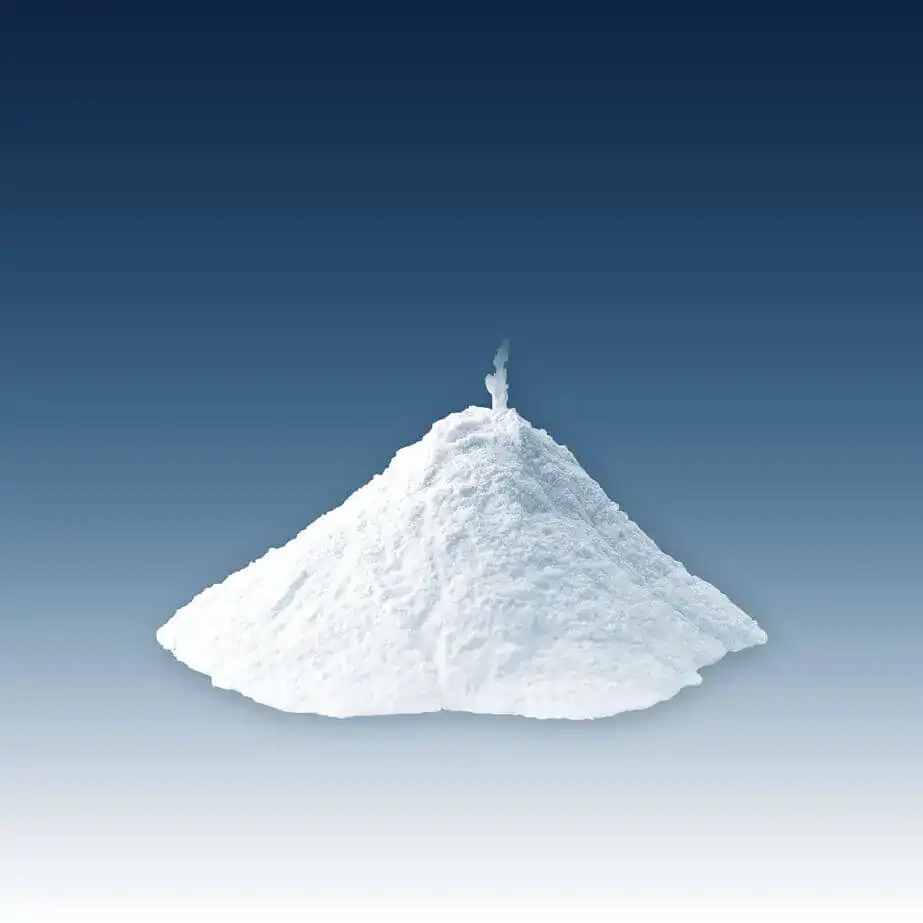
AdValue Technology offers high purity (>99.5%) Spherical Aluminum Nitride (AlN) Powders. Aluminum nitride powder is an advanced material with exceptional properties. Its combination of ceramic insulation properties, low thermal expansion, high elastic modulus and excellent thermal conductivity (similar to metals like copper and aluminum) positions it as a critical material for industries such as electronics, semiconductors and aerospace.
Our Aluminum Nitride powders are commonly used as a thermal filler in thermal conductive plastics, thermal conductive resin etc. It can also be used as an additive material for composites and ceramics to improve the material’s performance.
| Grade | Particle size shape | Density | Thermal Conductivity | Particle Size (D50) | Specific Surface (BET) | Bulk Density |
|---|---|---|---|---|---|---|
| ALN-PD-1 | Irregular | 0.67g/cm2 (Tap Density) | >170w/m·k | 1.12µm | 2.8m2/g | 0.32-0.4 |
| ALN-PD-2 | Irregular | 3.26g/cm2 | >170w/m·k | 5-10µm | 0.438m2/g | 1.3-1.5 |
| ALN-PD-3 | Spherical | 3.3g/cm2 | >170w/m·k | 20-40µm | 0.18m2/g | 1.4-1.6 |
| ALN-PD-4 | Spherical | 3.3g/cm2 | >170w/m·k | 40-60µm | 0.13m2/g | 1.6-1.8 |
| ALN-PD-5 | Spherical | 3.3g/cm2 | >170w/m·k | 70-90µm | 0.1m2/g | 1.7-1.9 |
| ALN-PD-6 | Spherical | 3.3g/cm2 | >170w/m·k | 90-110µm | 0.08m2/g | 1.7-1.9 |
| ALN-PD-7 | Spherical | 3.3g/cm2 | >170w/m·k | 110-130µm | 0.06m2/g | 1.7-1.9 |
Aluminum Nitride (AlN) powder is a high-performance ceramic material composed of aluminum and nitrogen. It sits in a unique class of advanced ceramics that combine outstanding thermal conductivity with excellent electrical insulation. Unlike most materials, its thermal conductivity (exceeding 170 W/m·K) approaches that of metallic aluminum, delivering metal-like heat dissipation without conducting electricity. That rare combination makes it invaluable in electronics, thermal management, and high-performance composites.
AdValue Technology supplies Aluminum Nitride powders at greater than 99.5% purity. That high-purity standard ensures minimal contamination, consistent material performance, and reliable results across research, manufacturing, and industrial applications.
All Aluminum Nitride powders from AdValue Technology are spherical in shape. Spherical particles pack more densely and flow more uniformly than irregular particles. This matters a great deal when using AlN as a thermal filler or additive, since better packing leads to improved thermal conductivity in the finished product.
A few things set AlN apart from the pack. First, its thermal conductivity exceeds 170 W/m·K, which is comparable to metallic aluminum. Second, it is an electrical insulator, meaning it handles heat without passing current. Third, it has a low thermal expansion coefficient, which reduces stress in assemblies that cycle between hot and cold. Put those properties together and you have a material that thrives in demanding electronics and thermal management environments where most ceramics simply cannot keep up.
AlN generally outperforms alumina and competes closely with boron nitride in thermal conductivity. Dense alumina ceramics sit around 20 to 30 W/m·K, while dense AlN commonly reaches approximately 140–200 W/m·K, depending on purity and microstructure. Hexagonal boron nitride can reach similar conductivity values but tends to be more expensive and anisotropic, meaning it conducts heat better in one direction than others. As a filler, AlN offers a strong balance of performance, processability, and cost, making it the preferred choice for many high-power thermal management applications.
AdValue Technology AlN powders deliver a thermal conductivity of greater than 170 W/m·K. To put that into perspective, copper sits around 400 W/m·K and aluminum around 200 W/m·K. For a ceramic material, exceeding 170 W/m·K is exceptional, and it is exactly why AlN powder is a top choice for thermal filler and composite applications in high-power electronics.
Here is a summary of the core physical properties across AdValue Technology AlN powder grades:
BET specific surface area measures the total surface area of a powder per unit of mass, expressed in m²/g. A higher BET value means smaller particles with more exposed surface area. This affects how the powder interacts with binders, resins, and polymers in composite manufacturing. Finer powders with higher BET values tend to disperse more readily but may require more binder to achieve full coverage, while coarser powders with lower BET values pack more densely and often deliver higher thermal conductivity in finished composites.
D50 is the median particle size of a powder distribution. It tells you that 50% of the particles in the sample are smaller than that value and 50% are larger. For example, a D50 of 5 to 10 micrometers means that half the particles fall below that range and half are above it. When selecting an AlN grade, D50 helps you match the powder to your application, whether you need fine particles for dense coatings or larger particles for high-packing-density composites.
Density varies slightly by grade. The finer ALN-PD-1 grade has a tap density of 0.67 g/cm³, while the coarser grades (ALN-PD-2 through ALN-PD-7) have true densities of approximately 3.26 to 3.3 g/cm³ and bulk densities ranging from 1.3 to 1.9 g/cm³. These differences reflect variations in packing efficiency driven by particle size.
Yes, AlN is sensitive to hydrolysis, meaning it can react with moisture or water to form aluminum hydroxide and release ammonia gas. This is why proper storage and handling in dry, sealed conditions is important. In composite and paste applications, manufacturers typically use surface-treated or coated AlN powders to improve moisture resistance and compatibility with polymer matrices.
AdValue Technology offers seven distinct grades of spherical Aluminum Nitride powder, ranging from sub-micron fine particles to large particles over 100 micrometers. This wide selection allows engineers and researchers to match the right grade to their specific application requirements, whether they need ultra-fine powder for coatings or coarse powder for dense thermal composites.
Here is a full overview of all seven AlN powder grades available from AdValue Technology:
| Grade | Particle Size (D50) | Thermal Conductivity | True Density | BET Surface Area | Bulk Density |
|---|---|---|---|---|---|
| ALN-PD-1 | 1.12 µm | >170 W/m·K | 0.67 g/cm³ (Tap) | 2.8 m²/g | 0.32 to 0.40 g/cm³ |
| ALN-PD-2 | 5 to 10 µm | >170 W/m·K | 3.26 g/cm³ | 0.438 m²/g | 1.3 to 1.5 g/cm³ |
| ALN-PD-3 | 20 to 40 µm | >170 W/m·K | 3.3 g/cm³ | 0.18 m²/g | 1.4 to 1.6 g/cm³ |
| ALN-PD-4 | 40 to 60 µm | >170 W/m·K | 3.3 g/cm³ | 0.13 m²/g | 1.6 to 1.8 g/cm³ |
| ALN-PD-5 | 70 to 90 µm | >170 W/m·K | 3.3 g/cm³ | 0.10 m²/g | 1.7 to 1.9 g/cm³ |
| ALN-PD-6 | 90 to 110 µm | >170 W/m·K | 3.3 g/cm³ | 0.08 m²/g | 1.7 to 1.9 g/cm³ |
| ALN-PD-7 | 110 to 130 µm | >170 W/m·K | 3.3 g/cm³ | 0.06 m²/g | 1.7 to 1.9 g/cm³ |
The right grade depends on what you are trying to achieve:
If you're unsure which grade fits your project, AdValue Technology's technical team can help you identify the best match based on your processing requirements and performance targets.
Yes, and this is actually a common technique in thermal composite manufacturing. Blending a fine grade like ALN-PD-1 with a coarser grade like ALN-PD-4 or ALN-PD-5 creates a bimodal particle size distribution. The fine particles fill the gaps between larger particles, increasing the total filler loading you can achieve in a polymer matrix. Higher filler loading directly translates to better thermal conductivity in the finished product.
AdValue Technology AlN powders serve a wide variety of applications across multiple industries:
AlN powder is a key material across several high-performance sectors:
| Industry | Typical Use Case |
|---|---|
| Electronics | Thermally conductive substrates, power modules, hybrid circuits, LED packages, RF/microwave packages |
| Semiconductor | Ceramic heaters, electrostatic chuck components, insulating parts, thermal-management components, chip packaging substrates |
| Aerospace | Thermal management components, electronic packages, sensors, structural ceramics |
| Automotive | EV power electronics, motor drives, chargers, thermal management |
| Medical Devices | Precision diagnostics, medical electronics, sensors, and thermally conductive insulating components |
| Research and Academia | Advanced ceramics, composite development, materials science |
| Manufacturing | Custom ceramic components, thermally conductive fillers, adhesives, potting compounds, encapsulants, and resin formulations |
When you mix AlN powder into a polymer or plastic matrix, the AlN particles create pathways that conduct heat through the material. This results in a thermally conductive plastic that can dissipate heat far more effectively than an unfilled polymer while still maintaining electrical insulation. AlN-filled plastics, adhesives, potting compounds, and encapsulants are widely used in LED housings, power electronics enclosures, and circuit board substrates where managing heat is critical to product lifespan and reliability.
Yes. Adding AlN powder to composites and ceramics improves thermal conductivity while maintaining electrical insulation. It can work as a primary raw material or as a thermally conductive filler or secondary additive that boosts the thermal and structural performance of the host material. Engineers designing parts for high-temperature or high-power environments regularly turn to AlN for exactly this reason.
Absolutely. AlN is widely used in semiconductor manufacturing, both as a substrate material and as a component in packaging and thermal management systems. Its high thermal conductivity helps dissipate heat generated by high-power semiconductor devices, while its excellent electrical insulation prevents unwanted current flow. In an industry where heat is the enemy of performance and reliability, AlN powder is a critical material.
LEDs and power electronics generate significant heat in a very small area. If that heat is not removed quickly, performance degrades and device life shortens. AlN substrates and AlN-filled compounds provide a direct, efficient path for heat to move away from the device. The combination of high thermal conductivity and electrical insulation makes AlN one of the best available materials for this critical thermal management function.
Yes. AdValue Technology provides customization options for particle size and purity to meet specific application requirements. Whether your project calls for a unique particle size distribution, a tighter purity specification, or a custom blend of grades, their team can work with you to develop a solution that fits your exact needs.
AdValue Technology serves both research-scale and production-scale customers. Whether you need a small quantity for laboratory evaluation or a large volume for full-scale manufacturing, reach out to their sales team to discuss availability and pricing for your specific quantity requirements.
Standard in-stock items typically ship within 1 to 2 business days. For custom specifications or larger orders, lead times will vary. Contacting the team early in your project planning process ensures you get accurate lead time estimates and avoids delays down the line.
Yes. AdValue Technology ships both domestically within the United States and internationally. No matter where your facility is located, their logistics capabilities are set up to deliver specialty materials to you wherever you need them.
Beyond Aluminum Nitride, AdValue Technology carries a broad portfolio of high-purity powders at purities ranging from 99.9% (3N) to 99.999% (5N), including materials such as:
Visit www.advaluetech.com to explore the full high-purity powder product lineup.
Yes. Their team is experienced in materials science and application engineering and can help you navigate the grade selection process. Whether you are a researcher trying a new composite formulation or an engineer sourcing materials for a production line, AdValue Technology provides the technical guidance you need to get it right.