No products in the cart.
Ultraviolet optical systems require careful material selection. A window, tube, plate, or sample cell must transmit the wavelengths required by an application while maintaining its shape under demanding operating conditions. Ordinary glass often limits UV performance because its composition absorbs more strongly at shorter wavelengths.
Fused quartz is a useful option for many UV systems. Its high silica content and optical clarity support ultraviolet transmission, while its low thermal expansion helps it withstand temperature changes. The right grade and component design can support reliable optical performance without forcing engineers to sacrifice thermal durability. Continue reading to explore fused quartz for UV optical transmission.
Visible light passes through many common transparent materials with little trouble. Ultraviolet light poses a tougher challenge because shorter wavelengths interact more strongly with impurities and additives within a material. These interactions can absorb or scatter light before it reaches a detector or sample.
The challenge increases as an application moves deeper into the UV range. A material that appears clear to the eye may still block wavelengths that an optical instrument requires. Engineers therefore need to evaluate transmission across the operating wavelength range rather than rely on visible clarity.
Material purity plays a central role. Trace contaminants can introduce absorption that reduces useful UV transmission. A high-silica composition helps limit many of the losses that conventional glass can cause.
Fused quartz glass combines high silica purity with an amorphous structure. Unlike crystalline quartz, it lacks an ordered crystal lattice. That structure provides optical uniformity and allows properly selected grades to transmit ultraviolet light effectively.
Fused quartz also contains fewer added compounds than many conventional glasses. Glass manufacturers often use additives to adjust processing behavior or other properties. Those additions can restrict UV transmission, while the silica-rich composition of fused quartz gives engineers a better starting point for short-wavelength optical work.
Still, engineers shouldn’t treat every grade the same. Raw material quality and production methods can influence hydroxyl content or metallic impurities. Those differences can change transmission, especially at shorter UV wavelengths.
For demanding deep-UV applications, synthetic fused silica may outperform standard fused quartz because manufacturers can control impurities more tightly. Engineers should compare the transmission data for the specific material grade before approving a component.

Optical transmission depends on more than the base chemical formula. Even small concentrations of unwanted elements can change how a material interacts with ultraviolet energy. Metallic contaminants can create absorption in parts of the UV spectrum.
Hydroxyl content can also influence optical behavior at specific wavelengths. Engineers should evaluate the impurity profile against the operating range instead of assuming that one quartz grade will fit every optical system.
That distinction is especially important in spectroscopy and analytical equipment. These systems often rely on precise light measurements, so unnecessary absorption can reduce the signal that reaches the detector.
The distance light travels through a component also affects optical performance. A thicker window gives UV light a longer path through the quartz, which can increase total absorption even when the material provides strong transmission.
Designers need to balance optical performance with mechanical requirements. A thinner component may reduce absorption, but the system may require greater strength. A thicker part may handle mechanical demands more comfortably while introducing additional optical loss.
The appropriate thickness depends on the wavelength range and component geometry. Mounting conditions and operating temperature can also influence the final choice. Engineers can compare these requirements early to ensure the component supports the complete optical design.
Strong bulk transmission can’t compensate for a poor optical surface. Scratches, chips, residue, or rough finishing can scatter light and reduce the amount that travels along the intended path.
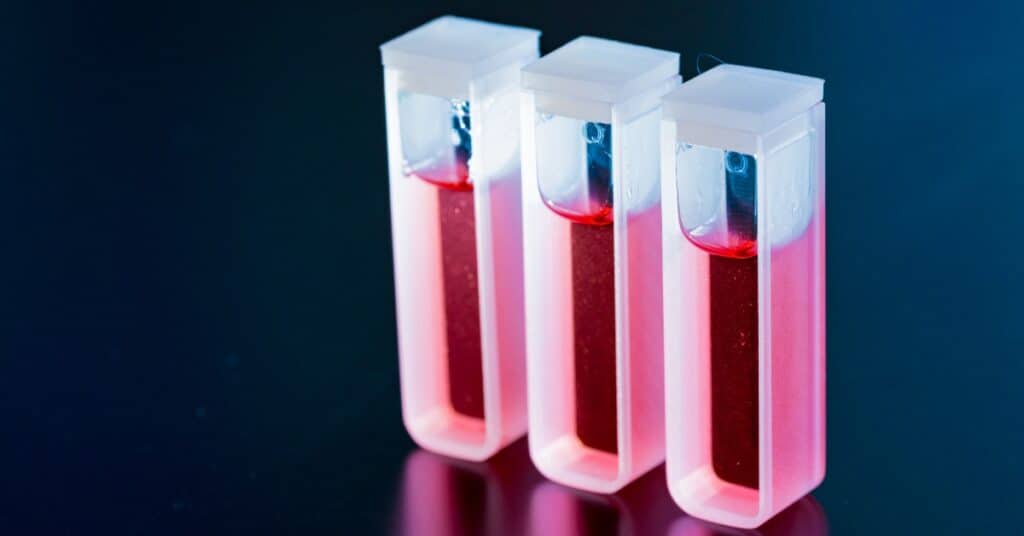
Surface finish carries particular importance for windows, discs, slides, and cuvettes. Polished optical faces help light enter and leave the material with fewer disruptions. Clean handling also supports consistent transmission because oils or dust can interfere with ultraviolet light.
Designers should match the surface specification to the system’s sensitivity. A protective viewing window may tolerate a different finish than a precision spectroscopy cell.
UV systems often operate near lamps or other heat sources. Fused quartz expands very little as temperature changes, which helps limit the thermal stress that can develop during heating and cooling.
That property gives designers more flexibility when a component needs both UV transmission and temperature resistance. Quartz can maintain useful dimensional stability through temperature changes that would place greater stress on many conventional glasses.
Engineers still need to consider the mounting design. Excessive clamping force or steep temperature gradients can create mechanical stress even when the quartz itself handles thermal change well.
Optical components need clean surfaces to transmit UV light consistently. Fused quartz resists many chemicals, giving laboratories and industrial users flexibility when they clean components or expose them to process environments.
Quartz does have chemical limits. Hydrofluoric acid attacks silica, while strong alkaline conditions can damage quartz under some operating conditions. Users should choose cleaning agents with the material and process environment in mind.
Careful handling also protects polished surfaces from contamination or abrasion. Maintaining those surfaces helps preserve the optical performance that the material can provide.
Fused quartz supports many systems that need ultraviolet light to pass through a transparent component. Spectroscopy equipment commonly uses quartz cuvettes or windows because ordinary glass can absorb too much UV energy.
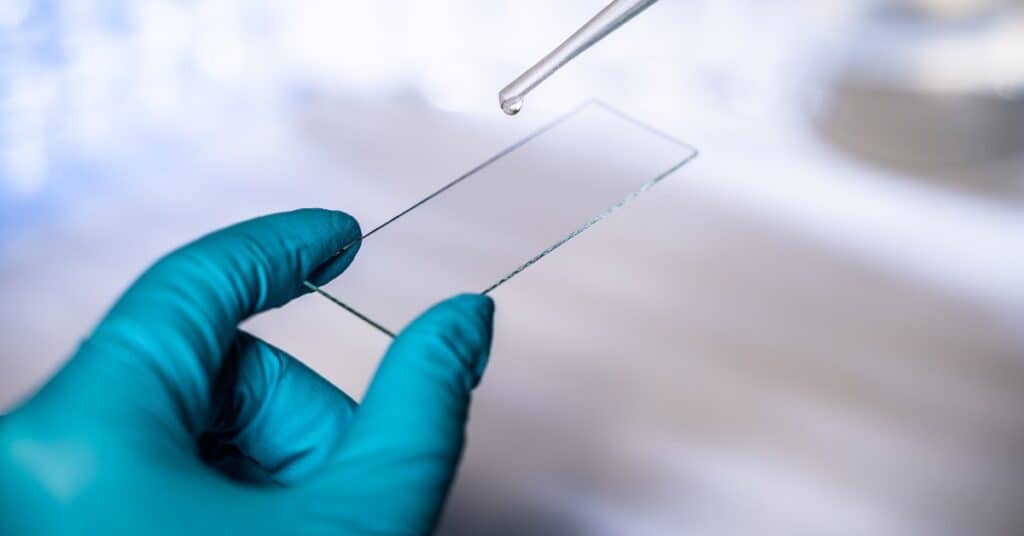
UV lamps may use quartz tubing when the design also requires heat resistance. Optical instruments can use quartz plates or slides when the system needs UV transparency with dimensional stability.
Semiconductor equipment and laboratory systems may also need custom shapes when standard components can’t fit the optical path. The application should drive the final grade and dimensions rather than the other way around.
Start with the wavelength range. Next, evaluate component thickness and surface finish. Geometry and thermal exposure can narrow the design requirements further. Chemical conditions add another important consideration.
Standard components can simplify purchasing when common dimensions fit the system. Custom quartz parts can support unusual shapes or tighter dimensional requirements when an optical design needs a more specific solution.
AdValue Technology identifies fused quartz as one of its main material categories and supplies stock products alongside custom orders for technical applications. We serve engineers and other technical users who need materials for demanding research or production environments.
UV transmission depends on the full optical path, not simply whether a material looks transparent. Purity and grade influence absorption, while thickness and surface condition affect how much useful light reaches its destination.
Fused quartz gives engineers strong UV optical transmission. Its chemical resistance can also support demanding operating environments. When designers match the grade and component specifications to the working wavelength range, they can build optical systems around measurable requirements instead of broad material assumptions.