No products in the cart.
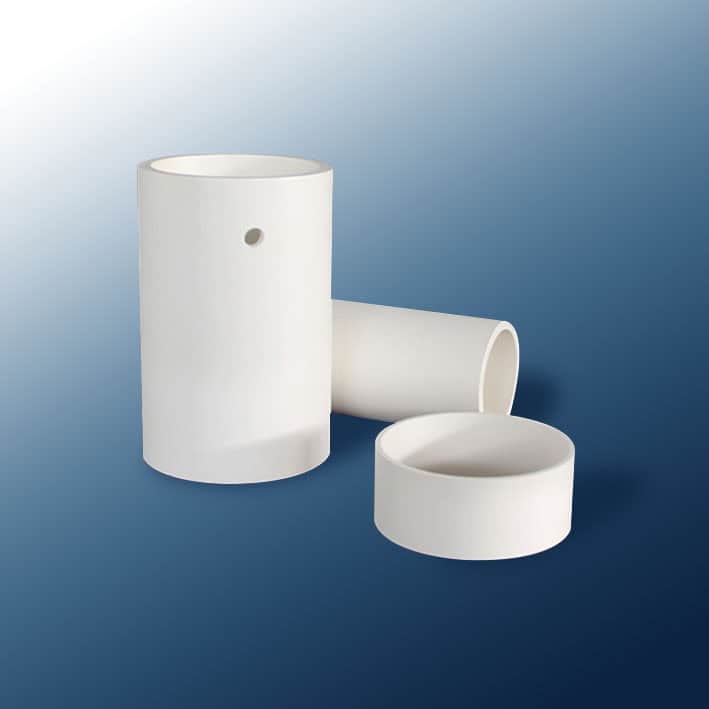
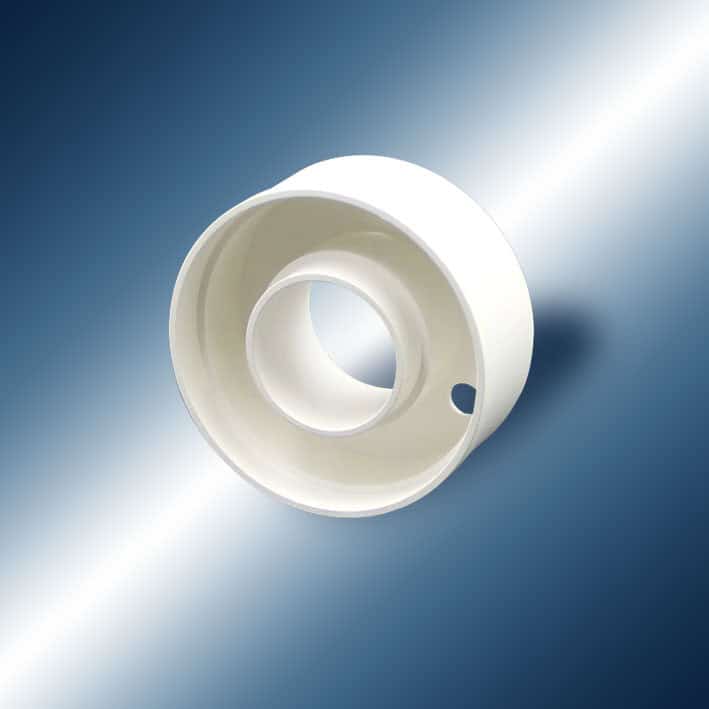
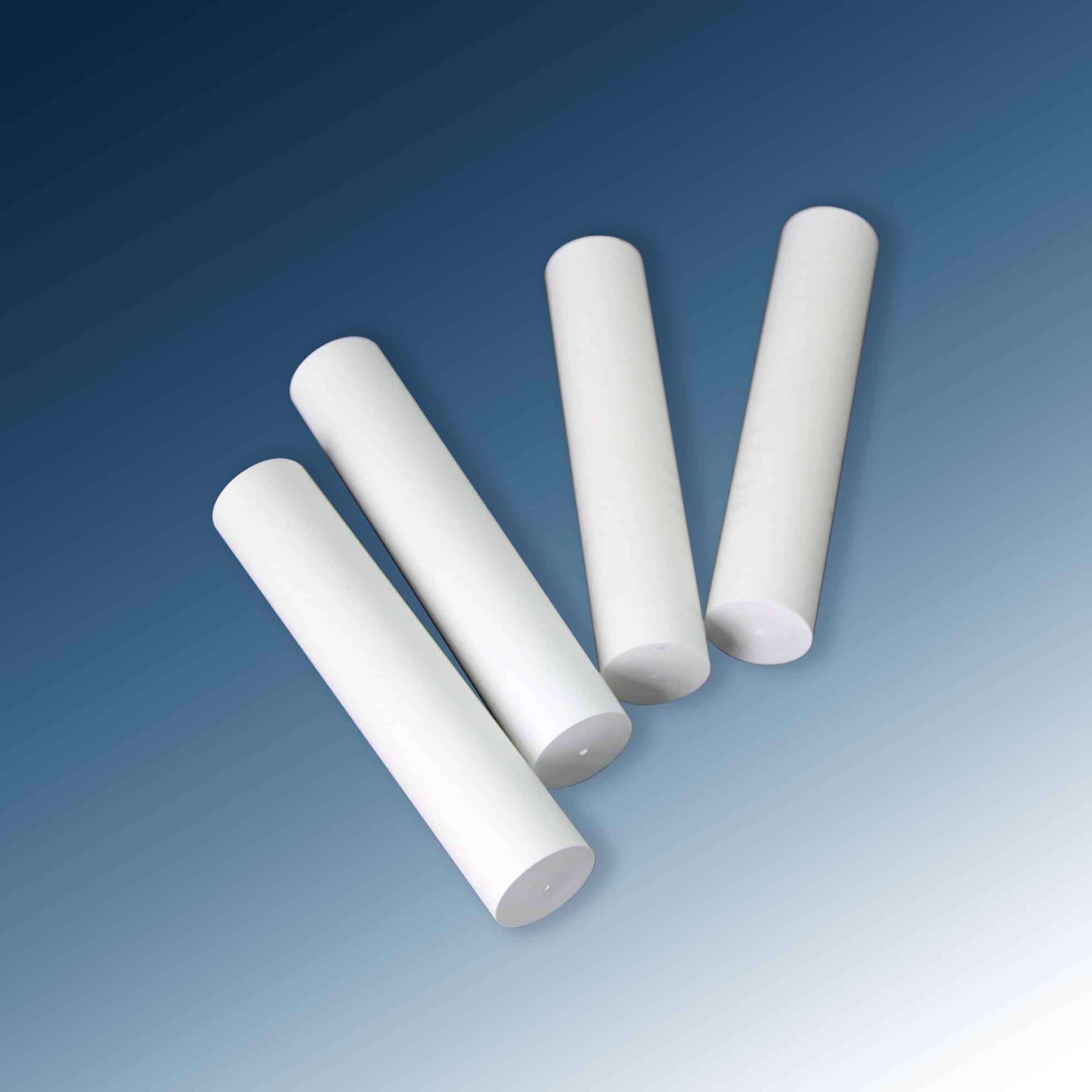
Boron Nitride (BN) is a unique and versatile advanced material renowned for its exceptional thermal stability, chemical inertness, electrical insulation, and lubricating properties. Combining outstanding machinability, thermal shock resistance, electrical insulation and a lightweight structure, BN is an ideal choice for a wide range of demanding applications across multiple industries.
Boron Nitride products are widely used across industries such as:
At AdValue Technology, we provide custom Boron Nitride products in various grades and shapes, tailored to meet specific application requirements.
| Grade | Unit | BN-A | BN-B | BN-E1 | BN-E2 | BN-AlN | BN-N | BN-S |
|---|---|---|---|---|---|---|---|---|
| Main Ingredients | BN99% | BN99% | BN+ZrO2+SiC | BN+ZrO2+SiC | BN+AlN | BN+Si3N4 | BN+SiO2 | |
| Density | g/cm3 | >2 | 2.15 | 2.3~2.35 | 2.6~2.7 | 2.8~2.9 | 2.5~2.6 | 2.1~2.15 |
| Hardness | HL | 300 | 450 | 570~620 | 520~550 | ≥650 | 650~680 | 700~750 |
| Flexural Strength | Mpa | 35 | 95 | 160 | 150 | 250~300 | 280 | 75 |
| Coefficient of Thermal Expansion (25°C~ 1200°C) | (10-6/K) | -1~2.5 | 1~2 | 2~3 | 3~5 | 4~5 | 2.5~3 | 2.5~3 |
| Thermal Conductivity at 20°C | W/mk | 50 | 35 | 15 | 30 | 65 | 45 | 20 |
| MAX-Temperature of use | Oxidizing | 900°C | 900°C | 900°C | 900°C | 950°C | 950°C | 1000°C |
| Vacuum | 1800°C | 1600°C | 1500°C | 1500°C | 1500°C | 1400°C | / | |
| Inert | 2200°C | 1800°C | 1700°C | 1700°C | 2000°C | 1700°C | 1000°C | |
| RT Resistivity | Ω.cm | >1014 | >1014 | >1012 | >1012 | >1014 | >1014 | >1014 |
| Property | Unit | Value |
|---|---|---|
| Lattice constant | m | a:2.504×10⁻¹⁰ c:6.692×10⁻¹⁰ |
| Apparent density | g/cm³ | 2.0 –2.21(board) 2.0 –2.17(crucible) |
| Helium transmissivity | cm³/s | 1×10⁻¹² |
| Microhardness | N/mm² | 691.88 |
| Volume resistivity | Ω·cm | 3.11×10¹¹ |
| Tensile strength | (Strength‖”C”)N/mm² | 153.86 |
| Bending strength | (Strength‖”C”)N/mm², a: | 243.63 |
| (Strength⊥”C”)N/mm², c: | 197.76 | |
| Elasticity modulus | N/mm² | 235690 |
| Thermal Conductivity | W/m·k | “a” direction “c” direction |
| W/m·k (200°C) | 60 2.60 | |
| W/m·k (900°C) | 43.70 2.80 | |
| Dielectric strength (room temperature) | KV/mm | 56 |
| Purity | % | 99.99–99.999 |
Please contact us for more information or to request a quote. We are committed to delivering high-quality Boron Nitride solutions tailored to your needs.
Sourcing Boron Nitride from the wrong supplier can cost more than money. It can affect performance, reliability, and project timelines. When your application involves extreme temperatures, semiconductor manufacturing, or precision furnace components, choosing the right material grade is critical. AdValue Technology supplies Boron Nitride products designed for the demanding applications that rely on this exceptional technical ceramic.
Boron Nitride isn’t a commodity material. It’s a high-performance ceramic engineered for conditions where most materials fail. The right grade depends entirely on your application. Hot-Pressed Hexagonal BN behaves differently from Pyrolytic BN. A BN-AlN composite performs differently from a 99% pure BN grade. Selecting a grade without understanding these distinctions can result in reduced performance or a material that is unsuitable for the intended application.
That’s exactly why AdValue Technology stands apart. The AdValue Technology team understands these material distinctions and offers a product range built around real-world engineering requirements.
AdValue Technology offers a wide range of hot-pressed hexagonal Boron Nitride grades, each engineered for a specific performance profile:
| Grade Type | Composition | Key Performance Profile | Typical Applications |
|---|---|---|---|
| High-Purity BN | 99%+ BN | High electrical resistivity, excellent thermal stability | Semiconductor processing, insulators, crucibles |
| BN-AlN Composite | BN + Aluminum Nitride | Enhanced mechanical strength, improved thermal conductivity | Structural furnace components, high-load thermal applications |
| High-Temperature BN | Hot-pressed hexagonal BN | Stable at temperatures up to 2,200°C in inert atmospheres | Furnace insulation, protective tubes, high-temperature processing |
| Machinable BN | Hot-pressed hexagonal BN | Excellent machinability for complex geometries | Custom precision components, tooling, fixtures |
| Low-Borate BN | Controlled borate content BN | Reduced contamination risk for sensitive processes | Microelectronics, clean-process semiconductor tooling |
| Thermally Conductive BN | Hot-pressed hexagonal BN | Optimized thermal conductivity with electrical insulation | Heat spreaders, thermal management systems |
| Chemically Resistant BN | Dense hot-pressed BN | Low wettability with molten metals, chemical inertness | Foundry crucibles, casting nozzles, metal contact applications |
That level of selection from AdValue Technology gives you the flexibility to match the exact grade to your temperature requirements, mechanical strength needs, and application environment.
When an application requires exceptionally high purity, standard hot-pressed BN may not be sufficient. That’s where Pyrolytic Boron Nitride (PBN) comes in. Produced through chemical vapor deposition (CVD), AdValue’s PBN achieves purity levels between 99.99% and 99.999%. It delivers a dielectric strength of 56 KV/mm at room temperature and thermal conductivity of 60 W/m·K in the a-direction at 200°C.
| PBN Property | Value | Significance |
|---|---|---|
| Purity Level | 99.99% – 99.999% | Minimal contamination risk for sensitive semiconductor and MBE applications |
| Dielectric Strength | 56 KV/mm (room temperature) | Outstanding electrical insulation performance |
| Thermal Conductivity (a-direction, 200°C) | 60 W/m·K | Effective heat dissipation in high-purity environments |
| Production Method | Chemical Vapor Deposition (CVD) | Enables ultra-high purity and controlled anisotropic structure |
For semiconductor processing, molecular beam epitaxy, and other applications where exceptional purity and contamination control are critical, PBN is a leading material choice. AdValue Technology delivers the material to the highest standard.
You’re not limited to a single product form. AdValue Technology supplies Boron Nitride in a full range of shapes and configurations, including:
Whether you need a standard crucible for a foundry application or a precision-machined custom component for a semiconductor tool, AdValue has you covered. Because many hot-pressed BN grades offer excellent machinability, they are well suited for custom components with complex geometries and application-specific dimensions.
AdValue Technology serves customers in sectors where material reliability is critical. Their Boron Nitride products support critical work across:
Standard sizes don’t always fit precision applications. AdValue Technology builds custom Boron Nitride products tailored to your exact requirements. Share your dimensions, operating conditions, and performance targets with the AdValue team, and we can help identify a suitable BN grade, product form, and manufacturing approach. You can also explore their high-purity Boron Nitride powders and review detailed technical specifications directly on their site.
AdValue Technology is based in Tucson, Arizona and ships domestically and internationally. Contact our team directly at +1 (520) 514-1100 or by email at sa***@*********ch.com to discuss your Boron Nitride requirements.
Boron Nitride (BN) is a high-performance technical ceramic composed of boron and nitrogen atoms. It comes in several structural forms, each with its own set of impressive properties.
Hexagonal Boron Nitride (h-BN) is the most common form used in industrial applications, valued for its outstanding thermal conductivity, excellent electrical insulation, and remarkable ease of machining. It is often called the “white graphite” because of its layered crystal structure and lubricating properties.
Whether you are managing heat in a semiconductor fabrication process or designing components for a high-temperature furnace, Boron Nitride delivers where conventional ceramics fall short.
AdValue Technology offers two primary categories of Boron Nitride products:
Within each category, multiple grades and composite options are available to match a wide range of application requirements.
Hot-Pressed BN is manufactured by applying high pressure and temperature to BN powder, resulting in a dense, machinable ceramic. It is available in multiple grades and composite formulations, making it versatile and cost-effective for a broad range of industrial uses.
On the other hand, Pyrolytic BN (PBN) is produced through a chemical vapor deposition (CVD) process, which deposits ultra-pure BN layer by layer onto a substrate. This creates a material with exceptional purity (99.99 to 99.999%), superior density, outstanding dielectric strength, and near-perfect chemical uniformity.
Because of these exceptional properties, PBN is the preferred choice for the most demanding semiconductor and high-vacuum applications where purity and precision are non-negotiable.
The nickname comes from its structural similarity to graphite. Both materials have a layered, hexagonal crystal lattice where atoms bond strongly within layers but weakly between them. This gives hexagonal BN the same lubricating, low-friction properties that make graphite useful as a solid lubricant.
The key difference is that BN is white and electrically insulating, while graphite is black and electrically conductive. That combination of graphite-like lubricity with ceramic-grade insulation is what makes BN so unique and widely used.
Hexagonal Boron Nitride is generally considered non-toxic and chemically inert under most conditions. It does not react with most acids, bases, or molten metals, which is one reason it is trusted in sensitive applications like semiconductor manufacturing and medical-adjacent research environments.
As with any fine powder or ceramic material, standard handling precautions such as avoiding inhalation of dust and using appropriate personal protective equipment are recommended.
AdValue Technology stocks a comprehensive range of hot-pressed BN grades and composite formulations to cover diverse application needs:
| Grade | Composition | Key Characteristic |
|---|---|---|
| BN-A | BN 99% purity | High-purity standard hexagonal BN grade |
| BN-B | BN 99% purity | Alternative high-purity HBN grade |
| BN-E1 | BN + ZrO₂ + SiC | Enhanced mechanical strength composite |
| BN-E2 | BN + ZrO₂ + SiC | High-performance BN/ZrO₂/SiC composite |
| BN-AlN | BN + Aluminum Nitride | Improved thermal conductivity composite |
| BN-N | BN + Silicon Nitride (Si₃N₄) | High strength and toughness composite |
| BN-S | BN + Silicon Dioxide (SiO₂) | Microwave-transparent composite grade |
The pure BN grades (BN-A and BN-B) are manufactured at 99% purity, making them suitable for demanding high-temperature and electrical insulation applications. For applications requiring even greater purity, AdValue Technology also offers Pyrolytic Boron Nitride at 99.99 to 99.999% purity.
BN composite grades blend Boron Nitride with other ceramic materials to enhance specific properties that pure BN alone cannot provide. Here is how each composite addition helps:
Properties vary across grades but here is the typical range for AdValue Technology hot-pressed BN products:
| Property | Range |
|---|---|
| Density | 2.0 to 2.9 g/cm³ |
| Hardness | 300 to 750 HL |
| Flexural Strength | 35 to 300 MPa |
| Thermal Conductivity at 20°C | 15 to 65 W/m·K |
| Room Temperature Resistivity | Greater than 10¹² to 10¹⁴ Ohm·cm |
| Coefficient of Thermal Expansion (25 to 1200°C) | -1 to 5 x 10⁻⁶ per K |
Maximum use temperatures depend on the operating atmosphere:
For the highest temperature applications, using BN in a vacuum or inert atmosphere dramatically extends its operational range. This flexibility is a key reason why BN is trusted in advanced furnace, semiconductor, and aerospace environments.
Pyrolytic Boron Nitride is an ultra-high-purity form of BN produced through a chemical vapor deposition (CVD) process. During CVD, boron and nitrogen-containing gases react at high temperature and deposit as a highly ordered, layered BN structure on a substrate.
Unlike standard hot-pressed ceramics, this CVD approach locks in extreme chemical stability and pushes purity as high as 99.999%. Because it successfully eliminates outgassing and porosity, PBN is the trusted baseline for semiconductor crystal growth and sensitive high-vacuum environments that demand absolute contamination control.
AdValue Technology PBN achieves a purity of 99.99 to 99.999%. That level of purity is critical in semiconductor and crystal growth applications, where even trace contaminants can compromise the electrical properties of the final product. Standard hot-pressed BN at 99% purity is excellent for most industrial uses, but PBN sets a significantly higher bar for purity-sensitive processes.
Here is a full breakdown of PBN properties as supplied by AdValue Technology:
| Property | Value |
|---|---|
| Purity | 99.99 to 99.999% |
| Volume Resistivity | 3.11 x 10¹¹ Ohm·cm |
| Tensile Strength | 153.86 N/mm² |
| Bending Strength | 197.76 to 243.63 N/mm² |
| Elasticity Modulus | 235,690 N/mm² |
| Dielectric Strength | 56 KV/mm |
| Thermal Conductivity at 200°C | 60 W/m·K |
| Thermal Conductivity at 900°C | 43.70 W/m·K |
| Helium Transmissivity | 1 x 10⁻¹² cm³/s |
PBN is the material of choice for crucibles and containers used in compound semiconductor crystal growth, such as Gallium Arsenide (GaAs) and Indium Phosphide (InP). Its ultra-high purity prevents contamination of the melt during the growth process. Its resistance to wetting by molten semiconductors means it does not stick or react with the material being grown. Add in its excellent thermal stability and ability to withstand the high-vacuum or inert-atmosphere conditions used during crystal growth, and PBN becomes nearly irreplaceable in this application.
AdValue Technology PBN has a dielectric strength of 56 KV/mm, which is exceptionally high. Dielectric strength measures how well an insulating material resists electrical breakdown under high voltage. A higher dielectric strength means the material can handle greater voltage loads without failing. This makes PBN ideal for high-voltage insulation components, capacitor substrates, and electronics applications where electrical integrity under stress is essential.
Yes. PBN has extremely low gas permeability and is commonly described as a non-porous, gas-tight ceramic. Typical data lists helium transmissivity of just 1 x 10⁻¹² cm³/s. In practical terms, this means PBN acts as an effective gas barrier, making it valuable in high-vacuum systems, hermetic enclosures, and any application where low gas permeability, low outgassing, and contamination control are critical.
Yes, and this is one of its most practical advantages. Hot-pressed hexagonal BN machines with the same ease as some hardwoods, using standard metalworking tools without the need for diamond grinding or specialized equipment. You can cut, drill, turn, and mill it into precise components with tight tolerances. For engineers and manufacturers who need custom shapes in short turnaround times, that machinability is a significant advantage over harder ceramics like alumina or silicon carbide.
Boron Nitride maintains outstanding electrical insulation properties even at very high temperatures. Its room temperature resistivity exceeds 10¹² to 10¹⁴ Ohm·cm, and it retains those insulating characteristics at elevated temperatures where most ceramics begin to struggle. This thermal-electrical stability is why BN is trusted in high-temperature furnace insulation, plasma systems, and semiconductor processing equipment.
Boron Nitride handles thermal shock exceptionally well compared with many technical ceramics. Its low anisotropic coefficient of thermal expansion (ranging from -1 to 5 x 10⁻⁶ per K across 25 to 1200°C) means it expands and contracts very little during temperature cycling.
Combined with its efficient thermal conductivity, BN resists cracking and structural failure when subjected to rapid temperature changes. This makes it well suited for applications with frequent heating and cooling cycles, such as induction heating, foundry work, and semiconductor processing.
Yes, BN has excellent resistance to wetting by molten metals, slags, and molten glass. Most metals and glasses show low adhesion to BN surfaces, which helps reduce sticking, buildup, and contamination during high-temperature processing.
This makes BN useful for molten metal handling, non-ferrous casting, glass forming, crucibles, nozzles, break rings, side dams, and release-coating applications. It prevents material adhesion, extends component life, and simplifies cleanup and maintenance.
Hexagonal Boron Nitride is a low-loss dielectric material, which means it can transmit microwave and RF energy with relatively low absorption under suitable conditions. This makes it useful for applications like radomes, antenna windows, and microwave heating system components. The BN-S composite grade (BN + SiO₂) specifically retains this microwave transparency while offering enhanced mechanical properties and dimensional stability compared to pure BN.
Thermal conductivity varies by grade and type. Hot-pressed BN grades range from 15 to 65 W/m·K at room temperature depending on the formulation. The BN-AlN composite grade delivers higher thermal conductivity due to the AlN addition. Pyrolytic BN provides 60 W/m·K at 200°C and 43.70 W/m·K at 900°C, showing that it retains strong thermal performance even at very high operating temperatures.
Boron Nitride products from AdValue Technology support a wide spectrum of industrial uses:
| Industry | Typical BN Application |
|---|---|
| Semiconductor | PBN crystal growth crucibles and boats, wafer processing fixtures, CVD reactor components, insulators |
| Steel and Foundry | Continuous casting nozzles, break rings, side dams, molten metal handling components, release coatings, mold release agents |
| Aerospace and Defense | Radomes, antenna windows, thermal protection components |
| Solar and Photovoltaic | Silicon crystal growth fixtures, guide components, release coatings, and high-temperature insulating parts |
| High-Temperature Furnace | Insulators, heating element supports, spacers, fixtures, crucible supports, and vacuum/inert-atmosphere furnace components |
| Electronics | Substrates, insulators, plasma-facing components, dielectric parts, and high-temperature electrical components |
| Research and Academia | High-temperature labware, custom experimental components |
| Automotive | Thermal management components, EV power electronics insulators |
In steel and foundry operations, BN components play several important roles. Its resistance to wetting by molten metals means it can serve as break rings, pouring nozzles, and mold coatings without bonding to the molten steel.
BN coatings also act as effective release agents and lubricants between metal surfaces, extending the life of casting molds and dies. The material survives the intense thermal cycling of foundry environments far better than most alternatives.
The semiconductor industry demands materials that combine ultra-high purity, chemical inertness, thermal stability, and precise machinability. BN checks all those boxes. PBN crucibles and components used in Gallium Arsenide and Indium Phosphide crystal growth do not contaminate the melt, withstand the high process temperatures, and resist attack from aggressive precursor gases. For wafer handling equipment and CVD reactor components, BN provides the reliability and cleanliness that semiconductor fabs require.
Solar and photovoltaic manufacturing processes rely on BN, especially in high-temperature fixtures, release coatings, guide components, liners, and specialty components used around silicon melting or crystal-growth operations. The Czochralski process, which is widely used to grow the silicon ingots that become solar cells, exposes equipment to very high temperatures and reactive silicon melts. BN components are capable of withstanding these conditions while resisting contamination of the silicon crystal, which is critical for maintaining the electrical performance of the finished solar cells.
AdValue Technology supplies Boron Nitride in a variety of standard forms to serve both direct use and further machining:
Whether you need a stock piece to machine in-house or a fully finished component ready to use, the team at AdValue Technology can accommodate your request.
Custom component design and manufacturing is a core capability at AdValue Technology. Because BN machines so easily, complex geometries and tight-tolerance custom parts are well within reach. Submit your design requirements or drawings to our team and we will work with you to produce components that match your exact specifications, whether you need a one-off prototype or a production run.
Yes, we provide precision laser machining services including cutting, drilling, scribing, and marking of hard and brittle materials. When your BN components demand ultra-precise features or complex patterns that exceed the limits of traditional machining, our laser processing capabilities deliver the exact tolerances you need. Contact us to explore how we can machine your custom designs.
Absolutely. AdValue Technology serves researchers, engineers, and manufacturers at every scale. Whether you need a single plate for a laboratory experiment or a bulk order for full-scale production, they are set up to fulfill your order. Reach out to our sales team to discuss availability and pricing for your specific quantity.
Standard in-stock items typically ship within 1 to 2 business days. Custom components and specialty grades may have longer lead times depending on the scope of work. As part of our ordering and shipping process, we communicate lead times promptly so you can plan your project timeline with confidence.
Yes. AdValue Technology serves both U.S. and international customers. Wherever your facility is located, we are equipped to ship Boron Nitride products to you with expedited options available when needed.
AdValue Technology is a full-service specialty materials supplier. Alongside Boron Nitride, their product catalog includes:
For over two decades, AdValue Technology has been a leading provider of specialty ceramics and materials and a trusted materials partner for engineers and researchers who cannot afford compromises in quality or lead times.
Here is what we bring to your supply chain:
From a research lab exploring new semiconductor processes to a foundry producing steel components at scale, we have the Boron Nitride solutions to power your next breakthrough. Contact us today to get started.




 Technical Info