No products in the cart.
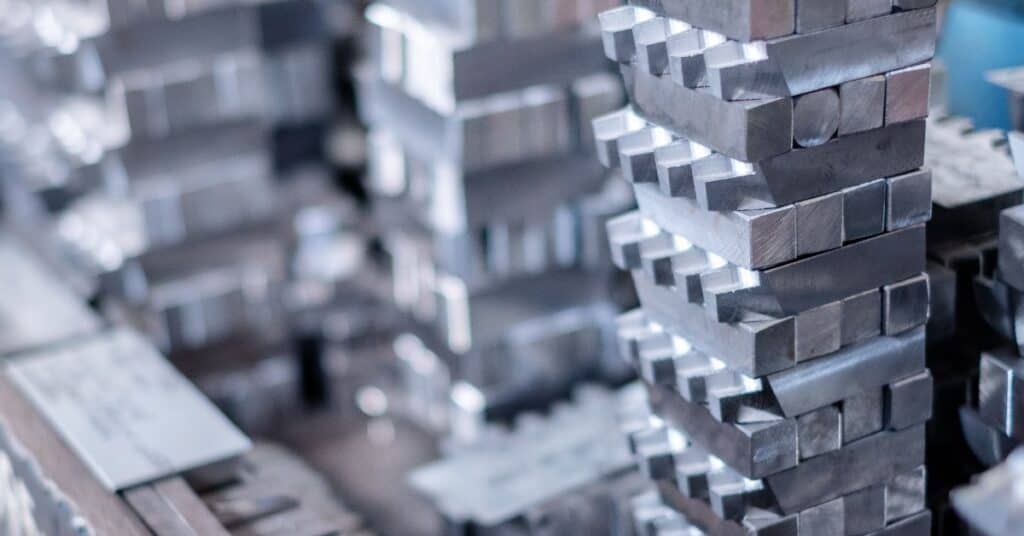
Steel components can leave the machine shop with impressive strength and still fall short at the surface. Fine scratches may interfere with a precision fit, while inconsistent polishing can make inspection more difficult. When manufacturers work with iron-based alloys, their choice of finishing material deserves as much attention as the cutting operation that came before it.
High-purity alumina powder offers an effective way to refine suitable metal surfaces. Its hardness makes it an effective abrasive, while carefully selected particle characteristics help technicians control the finish.
Ferrous alloys contain iron as their principal constituent. Alumina, or aluminum oxide, serves as an abrasive in selected grinding and polishing processes for these materials.
That role differs from adding alumina directly to molten steel. Unwanted oxide particles within an alloy can become inclusions that compromise product quality. For most ferrous-alloy finishing applications, technicians want alumina to act on the surface and leave the finished component clean.
Not every polishing operation requires the highest available purity. However, stringent cleanliness requirements can make trace ingredients in abrasive powder worth examining. High-purity grades limit the amount of material other than aluminum oxide that enters the finishing process.
Purity alone doesn’t guarantee a smooth surface or prevent contamination. The polishing equipment and working environment can introduce particles, independent of the abrasive. Engineers should match the powder specification to the finished part’s requirements rather than assuming that a higher purity percentage always yields a better result.
Particle size affects how aggressively alumina interacts with a ferrous surface. Larger abrasive grains generally remove material faster, but they can leave more visible marks. Finer particles support later finishing stages when the goal shifts toward reducing surface roughness.
A part with machining marks may require a different approach than one that already has a uniform ground finish. Technicians often work through progressively finer abrasives so that each stage removes the marks from the previous stage.
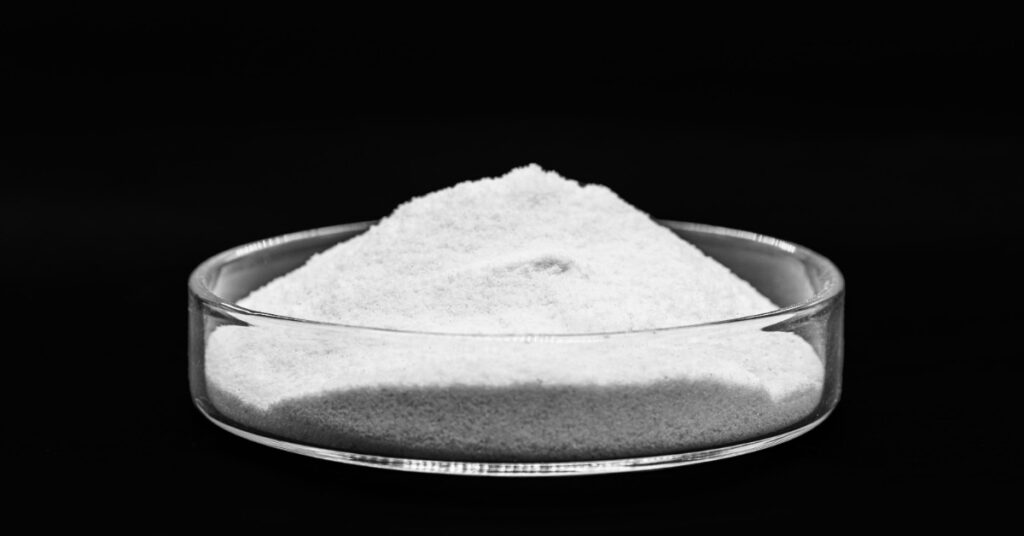
Suppliers often report D50, the median particle size from their measurement process. This value helps teams compare grades, but it doesn’t describe every particle in the container. A small number of oversized grains can still cause unwanted scratches during fine polishing. D90 and D99 (top-cut) are often used by industry for controlling oversized scratch-inducing particles.
Particle shape also affects how an abrasive cuts. Agglomerates can behave like larger particles even when the individual grains are small. When a component requires a particularly consistent finish, ask about particle size distribution and dispersion behavior.
A mild steel part won’t necessarily respond to polishing the same way as hardened tool steel. Hardness affects material removal, while the alloy’s microstructure can influence the final surface appearance. Stainless steel also brings its own challenges because some grades readily smear or develop heat-related discoloration under unsuitable finishing conditions.
Start with the alloy and its heat-treatment condition before selecting an abrasive. Consider the surface roughness target rather than choosing powder solely by its purity.
Alumina powder can’t compensate for every problem left by earlier machining steps. Deep tool marks may require a controlled grinding stage before fine polishing is practical. Trying to remove those defects with extremely fine powder can waste time and encourage uneven pressure.
Clean the part before switching to a finer abrasive. Residue from an earlier step can carry coarser particles into the next stage, creating new scratches. Simple separation of grinding and polishing equipment can reduce cross-contamination in a busy workshop.
Some finishing operations use alumina powder in a liquid slurry that transports abrasive grains across the workpiece. The mixture’s concentration affects contact between the abrasive and the metal surface. Too much powder can hinder movement or cleanup, while too little may slow removal.
Choose a carrier fluid that suits the equipment and metal. Keep the abrasive moving evenly through the liquid and monitor the mixture as work continues. If particles settle or clump, operators may see inconsistent polishing even when they began with an appropriate powder grade.
More pressure doesn’t automatically produce a better finish. Excessive force can increase local heating and alter how the abrasive moves across the surface. On some ferrous alloys, poor heat control may cause discoloration or distort the surface condition that the process aims to improve.
Set contact pressure and polishing time according to the component’s geometry. Watch for unusual friction or a sudden change in removal behavior.
Abrasive particles and removed metal must leave the work area as polishing progresses. Otherwise, residue can circulate through the process and scratch the component again. Workpieces with narrow channels or recessed features may need extra attention during cleaning.
After polishing, use a cleaning method that fits the alloy and the part’s intended service. Inspect for remaining powder before assembly or coating. Cleaning isn’t merely cosmetic when a small particle could affect a precision fit or interfere with later manufacturing steps.
Alumina belongs to the conventional abrasive family. By contrast, manufacturers classify diamond and cubic boron nitride as super abrasives, and those materials can suit demanding finishing or grinding applications. Cubic boron nitride often performs well on hardened ferrous metals, particularly where cutting conditions challenge conventional abrasives.
That doesn’t make alumina an inferior choice for every steel part. Finishing goals and equipment compatibility still drive the decision. Teams should compare removal rates and final surface quality before paying for an abrasive with capabilities the job doesn’t need.
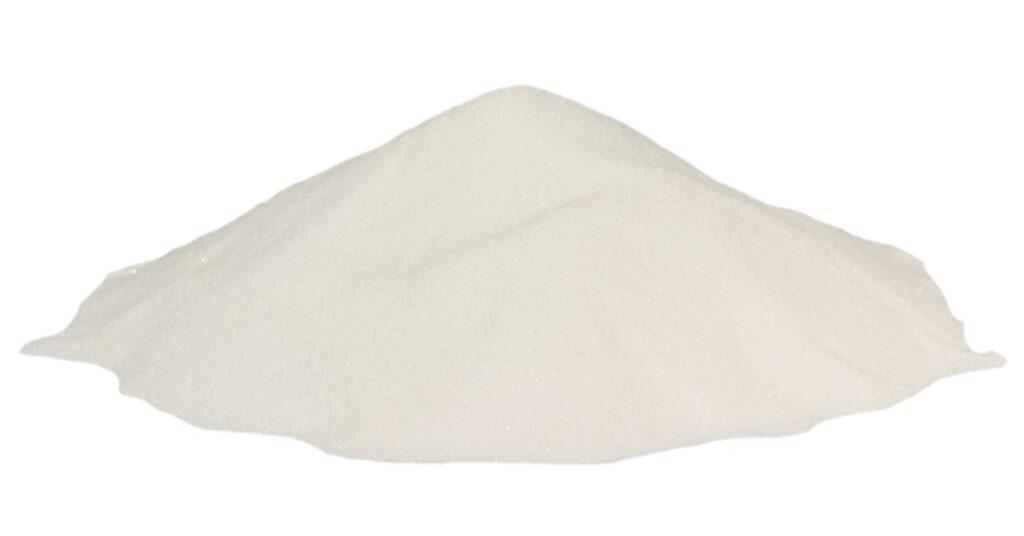
Alumina powder also serves as a feedstock for certain ceramic coatings. With an appropriate thermal spray process, manufacturers can deposit alumina onto compatible metal components to add a hard ceramic surface. Such coatings may offer wear resistance or electrical insulation where the design calls for those properties.
Coating applications require different powder characteristics than loose-abrasive polishing. Feedstock flow and particle morphology influence spraying behavior, while surface preparation affects coating adhesion. A powder suitable for a polishing slurry won’t automatically suit a thermal spray system.
AdValue Technology offers alumina powders across several purity levels, along with a range of particle sizes. Its specialty metal-polishing series includes alpha-alumina grades with particle sizes suited to different finishing stages. The company also supplies higher-purity powders for applications with stricter material requirements.
Ask whether the powder’s size distribution and crystal phase fit the proposed process. For sensitive parts, trial batches can help determine whether additional purity delivers a worthwhile improvement.
A successful polishing result should meet a measurable target, not just look bright under shop lighting. Compare surface roughness before and after processing, then examine areas where scratches tend to remain. If a component has a dimensional tolerance, confirm that polishing hasn’t removed too much material.
Record the powder grade and operating conditions during the trial. Those details make it easier to repeat a good finish across later batches.
High-purity alumina powder can play a valuable role in processing ferrous alloys, especially when manufacturers need controlled surface refinement. Its benefits depend on thoughtful grade selection and a polishing method that suits the steel.
AdValue Technology supplies alumina powders for precision metal polishing and other technical applications. Explore the available grades or discuss your surface requirements with its team before selecting a powder. A well-matched abrasive gives every finishing step a clearer purpose and every completed part a stronger start.