No products in the cart.
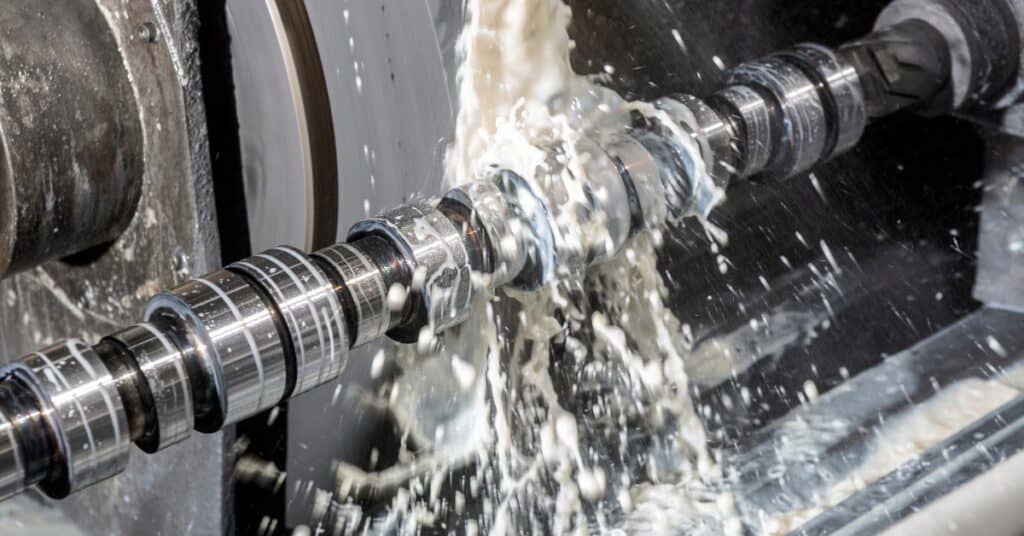
Camshafts operate through repeated, precise contact with valve train components, so manufacturers need tight control over lobe geometry and surface quality during production. Grinding plays a major role in producing those finished surfaces because it can shape hardened materials while maintaining tight dimensional tolerances. The abrasive within the grinding wheel directly influences cutting behavior, wheel wear, heat generation, and finish quality.
Cubic boron nitride has become an important abrasive for demanding grinding of ferrous materials because it combines extreme hardness with strong thermal stability. These characteristics suit the controlled, high-speed grinding conditions that camshaft production often requires. Understanding how CBN abrasive powder affects camshaft grinding and wheel performance can guide grain selection and bond design.
A camshaft controls valve movement through precisely shaped lobes. Small changes in the lobe profile can affect how the valve train tracks that geometry, placing strict demands on the grinding process. Manufacturers need a process that removes material efficiently without sacrificing profile accuracy or surface quality.
Camshaft production can involve hard ferrous materials that challenge conventional abrasives. Each abrasive grain experiences force and heat at the contact zone. Excessive wheel wear can alter the cutting profile, while excess heat can affect the finished surface.
Engineers need to consider how the abrasive fractures, how long it retains a cutting edge, and how well the bond retains the grain. The right combination supports a stable grinding process across repeated production cycles.
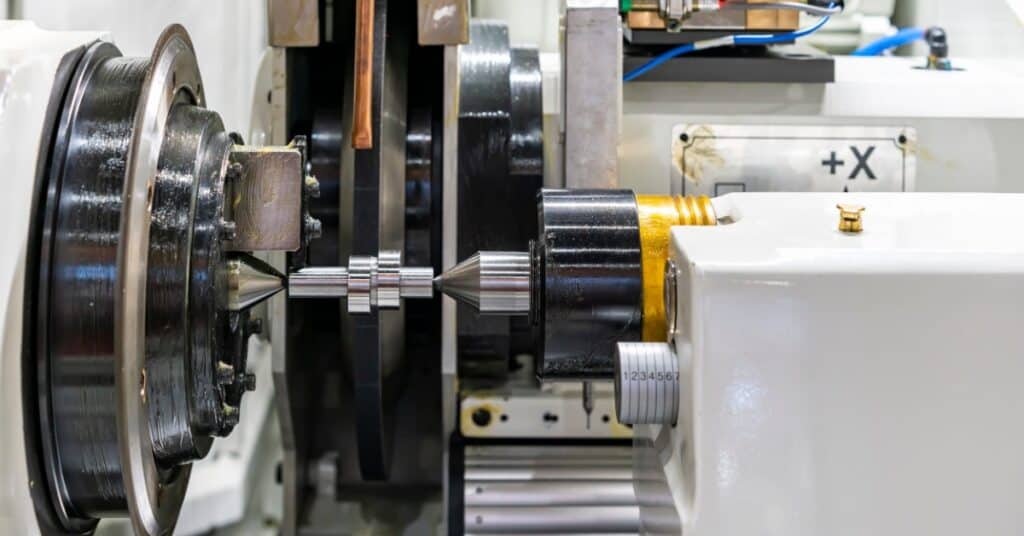
CBN ranks among the hardest abrasive materials for industrial grinding. It also offers high thermal stability and strong wear resistance, which help the abrasive maintain cutting performance under demanding conditions. These traits make CBN powder practical for grinding hardened steels and other ferrous materials.
Diamond offers greater hardness, but CBN generally provides better chemical compatibility with iron-based materials during high-temperature grinding. That compatibility gives CBN an important role in precision grinding applications involving hardened steel.
CBN can provide longer cutting life than conventional abrasives under suitable conditions. A grain that stays sharp can slow wheel degradation and help manufacturers control dimensional variation.
Not every CBN grain behaves the same way. Crystal morphology, toughness, surface texture, and fracture behavior influence how an abrasive interacts with the workpiece. Engineers should match those characteristics to the grinding method rather than selecting a grade based solely on hardness.
A blocky grain can offer strong grain retention because the bond can hold a substantial crystal body. Grains with multiple cutting edges can expose fresh contact points as the wheel works. More friable grains break down faster, which can renew cutting edges but also increase abrasive consumption.
AdValue Technology identifies its CBN-88 grade as a blocky CBN abrasive with multiple cutting edges and good sharpness. The company lists that grade for vitrified and metal bond systems, as well as for electroplated tools, including high-speed precision grinding of automotive crankshafts and camshafts.
Particle size affects how aggressively a grinding wheel engages the workpiece. Larger abrasive grains can create deeper cutting interactions and support stronger stock removal, while smaller grains can support finer finishing. The best range depends on the wheel design and the required camshaft surface.
Camshaft grinding often requires a single-wheel system to balance removal rate with profile control. An overly aggressive abrasive selection can make finish control harder, while a grain that cuts too mildly may increase cycle time or grinding energy.
AdValue offers its CBN-88 grade across a broad mesh-size range, giving tool designers flexibility to select particle sizes to match specific wheel requirements. Process trials remain important because machine behavior, coolant delivery, wheel speed, and workpiece material all influence the outcome.
The abrasive grain does the cutting, but the bond controls how the wheel holds and releases that grain. Vitrified bonds have a strong presence in precision CBN grinding because they can support rigid wheel structures and controlled porosity. Wheel manufacturers can use that structure to manage chip clearance and coolant access.
Camshaft grinding places a premium on profile retention. The wheel needs to preserve the geometry required to generate the lobe form while still exposing effective cutting points. A suitable vitrified CBN system can support that combination when the grain and bond work together effectively.
Metal and electroplated systems can also use CBN grains when applications call for different retention characteristics. AdValue lists CBN-88 for these bond families, giving tool designers flexibility around wheel architecture.
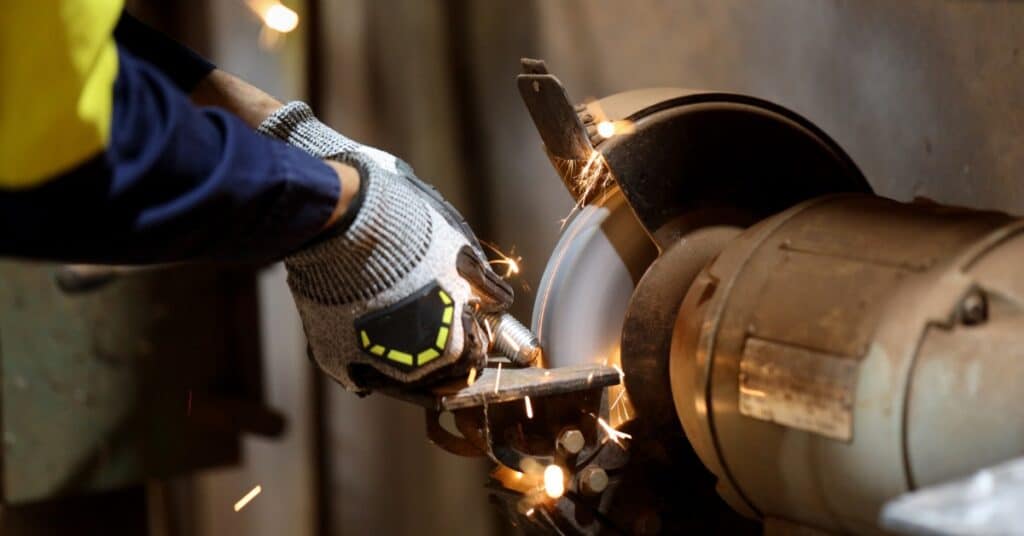
Grinding generates heat where the abrasive meets the workpiece. In camshaft production, engineers want to control that thermal load because high grinding temperatures can interfere with surface integrity and process stability. Abrasive choice influences how efficiently the wheel cuts and how much energy enters the contact zone.
CBN offers useful thermal characteristics for this environment. A sharp CBN grain can remove material through cutting rather than excessive rubbing when the process uses suitable parameters. That action can help limit grinding energy and support cooler operation.
Wheel condition affects the outcome. A loaded or poorly dressed wheel can increase friction even when the wheel contains a high-performance abrasive. Manufacturers need to treat grain selection, dressing, coolant delivery, and operating parameters as parts of one grinding system.
Abrasive performance depends on the wheel surface that contacts the workpiece. Dressing restores the cutting surface and helps maintain the wheel profile during production. Camshaft applications require careful dressing because the wheel geometry directly affects the finished lobe shape.
CBN wheel systems can extend the interval between dressing operations when the abrasive and bond resist wear effectively. Longer intervals can reduce interruptions, but manufacturers still need to monitor wheel condition and base dressing decisions on grinding behavior.
Consistent dressing also helps the wheel present abrasive grains in a repeatable way. That repeatability supports more stable cutting forces and surface results from one camshaft to the next.
Engineers get the most value from CBN when they define the full grinding requirement before choosing a grade. Workpiece hardness and target surface finish both affect the selection. Bond type and wheel speed also influence how the abrasive performs, along with the dressing method.
A camshaft operation that prioritizes high-speed production may require a different CBN abrasive powder specification than a process focused on finer finishing. Grain strength can influence wheel life, while crystal shape can affect cutting action. Particle size provides another control point for balancing removal and finish.
AdValue Technology supplies CBN abrasive options with different crystal characteristics and particle sizes for bonded grinding tools. That range allows manufacturers to evaluate a powder against the wheel design rather than treating every CBN grade as interchangeable.
Camshaft grinding requires control at every point where the wheel meets the workpiece. The abrasive must cut hardened material efficiently while supporting the profile accuracy and surface quality the component needs. CBN gives wheel designers a strong option because it combines extreme hardness with thermal stability and strong wear resistance in demanding ferrous grinding.
The best results still come from matching the abrasive to the complete process. Grain morphology, particle size, bond selection, dressing conditions, and machine parameters all shape grinding behavior. When engineers choose those elements as a coordinated system, CBN abrasive powder can support consistent camshaft production and reliable wheel performance.