No products in the cart.
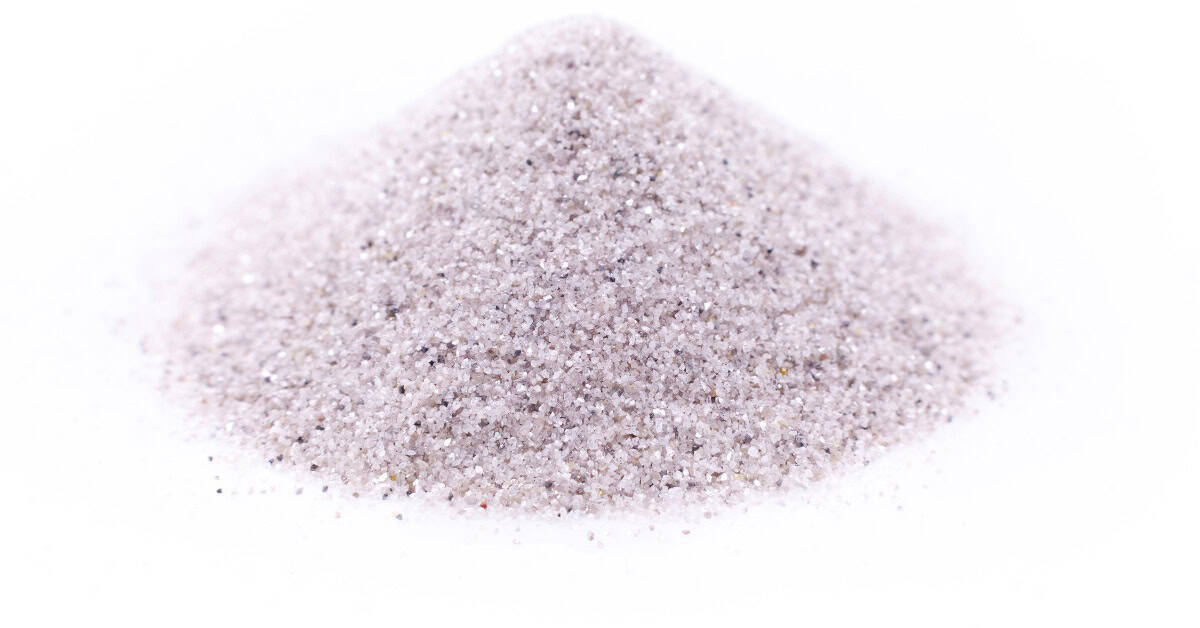
Optical lapping asks an abrasive to do two jobs at once. It must remove material at a useful rate while keeping surface damage, deep scratches, and local defects under tight control. Diamond handles the cutting side well because its hardness makes it effective on difficult optical and technical materials. The harder challenge comes from controlling how thousands of individual particles interact with the surface.
Micronization gives manufacturers a way to shape that interaction. By reducing diamond into controlled micron and submicron size ranges, manufacturers can match an abrasive more closely to a lapping stage, substrate, carrier, and finish target. Good micronization doesn’t simply create smaller diamond. It creates a particle population with more predictable cutting behavior. Continue reading to explore diamond powder micronization for optical lapping.
Particle size strongly influences how aggressively diamond powder engages a workpiece. Larger particles generally create deeper cutting paths and support faster stock removal, while smaller particles favor finer finishing. Optical lapping often uses a sequence of sizes because one grade rarely delivers both rapid correction and a highly refined surface.
A process may begin with a coarser micron grade to remove grinding marks or correct geometry. Later stages can step down to finer diamond to reduce the depth of the remaining scratch pattern. Each transition should remove damage from the previous stage rather than simply add a finer texture over deeper defects.
The nominal size alone doesn’t tell the whole story. A supplier may label a powder with a certain micron range, but the powder still contains a distribution of particle sizes. A small number of oversized particles can cut much deeper than the rest of the abrasive population, so tight oversize control plays a major role in precision lapping.
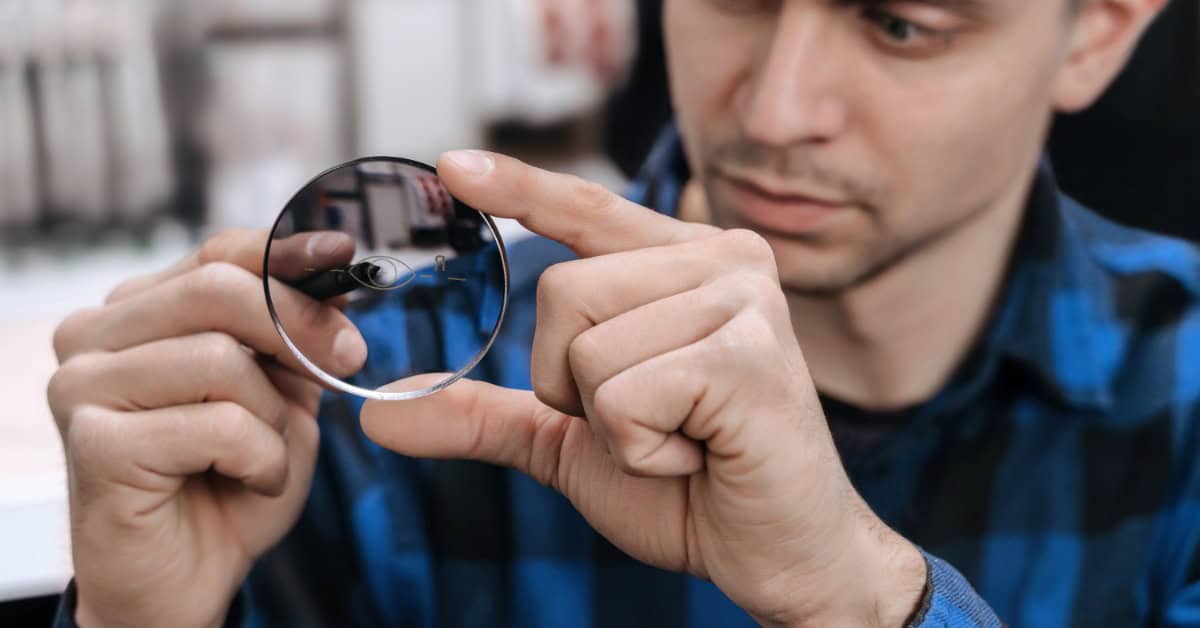
Manufacturers use crushing, milling, grading, and classification processes to create micron diamond powders. The exact process depends on the diamond type and target particle characteristics. Effective micronization focuses on average particle size, unwanted coarse particles, and the overall width of the size distribution.
A narrow particle size distribution gives the lapping process a more uniform abrasive population. More particles engage the optical surface at comparable scales, which helps operators maintain a consistent removal pattern. A broad distribution creates a wider range of cutting depths and can make surface results harder to predict.
Particle size analysis helps suppliers verify each grade against its specification. For optical work, the upper size limit can carry as much practical importance as the average size. A tightly controlled powder reduces the chance that a stray coarse grain will leave a scratch that forces extra polishing or rework.
Micronization also affects particle shape. Diamond grains can present blocky, angular, irregular, or microstructured surfaces depending on the source material and processing route. Those differences change the number and orientation of cutting points that reach the workpiece.
Monocrystalline diamond contains a single crystal structure and often suits precision grinding, lapping, and polishing applications. Under load, individual particles can fracture along crystallographic planes and expose new cutting edges. Polycrystalline diamond contains many small crystallites within each particle, and its microstructured surface can create numerous contact points during lapping and polishing.
Neither structure automatically fits every optical process. Substrate hardness, desired removal rate, target finish, lap material, and operating conditions can all influence the better choice. Engineers often gain more useful information from particle shape, toughness, and size distribution together than from micron size alone.
Optical finishing leaves little room for contamination. Foreign particles can alter cutting behavior, introduce scratches, or complicate downstream cleaning. Manufacturers therefore pair micronization with cleaning and quality-control steps that limit unwanted material in the final powder.
That requirement connects diamond abrasives with the broader handling standards used for high-purity powders. Clean feedstock, controlled processing equipment, careful washing, and suitable packaging all help preserve powder quality from production through use. A supplier should treat cleanliness as a functional property, not merely a specification line.
Process engineers should also consider contamination after the powder reaches the lapping area. Dirty mixing vessels, worn tooling, reused carriers, airborne debris, or cross-contamination between abrasive grades can defeat tight powder control. A well-graded diamond powder performs best when the surrounding process preserves the same discipline.
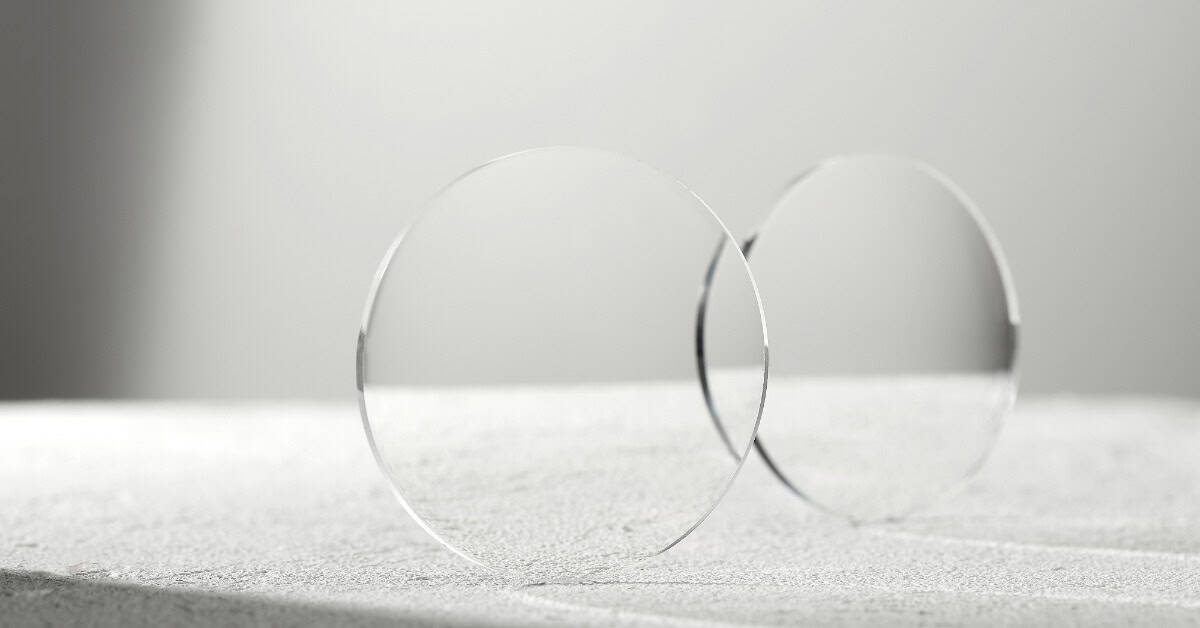
Diamond powder needs a carrier that distributes particles across the lapping interface. Water-based and oil-based diamond suspensions both serve precision finishing applications, and the right choice depends on the substrate, lap, machine, cleaning requirements, and process chemistry.
Good dispersion keeps particles available for cutting and limits clustering. Fine particle clusters can behave differently from well-separated primary particles, which can disrupt a carefully selected abrasive size. Operators should control mixing, concentration, delivery rate, and suspension stability alongside particle size.
A tightly micronized powder can’t deliver consistent results if the slurry feeds the lap unevenly. The powder and carrier need to function as one abrasive system.
Optical lapping never depends on diamond powder alone. Lap material, pressure, relative motion, slurry flow, abrasive concentration, conditioning, and machine geometry all influence the surface. Lapping can involve diamond particles that embed in the lap as well as loose particles that move between the lap and workpiece.
A controlled powder gives engineers a stable abrasive input while they tune the remaining variables. That stability becomes valuable during process transfer, troubleshooting, or production scaling. When particle size and shape remain consistent from lot to lot, engineers can investigate machine and process variables without adding unnecessary abrasive variation.
Choosing a diamond grade starts with the required surface condition and removal task. Coarser grades suit heavier correction, while finer grades support later finishing stages. Suppliers offer micron diamond across broad size ranges, including fine fractions for polishing and lapping.
The best sequence depends on how much material the process must remove and how quickly the next step can erase the previous scratch pattern. Large jumps between grades can leave deeper features behind. Very small jumps can add time without producing enough improvement to justify the extra stage.
Engineers should evaluate the full abrasive specification when they compare grades. Particle size distribution, upper size control, crystal type, shape, cleanliness, and compatibility with the intended carrier can all influence performance. Tight control across those properties supports repeatable optical lapping more effectively than a nominal micron number by itself.
Diamond gives optical lapping a powerful cutting mechanism, but diamond powder micronization turns raw abrasive capability into a controlled finishing tool. Precise sizing limits unwanted coarse particles, controlled shape influences cutting behavior, and careful cleaning protects the surface from foreign contaminants.
A successful process still depends on the entire lapping system. Engineers need to pair the powder with the right carrier, lap, pressure, concentration, and sequence of abrasive grades. When those choices work together, micronized diamond can support efficient stock removal while giving operators tighter control over the final surface.
For optical components with demanding finish requirements, that balance defines the value of a well-specified diamond powder. The smallest particle isn’t always the best particle. The best choice is the grade that produces the required surface with repeatable behavior at the right stage of the lapping process.